
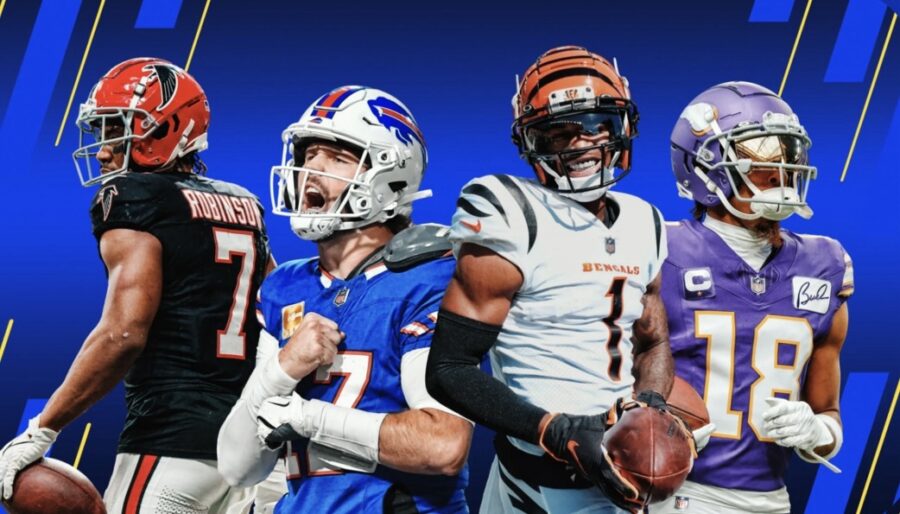
Fantasy football is not won because you know the biggest names.
Everybody knows Ja’Marr Chase is great. Everybody knows Bijan Robinson can carry a lineup. Everybody knows Josh Allen can break a scoreboard when he starts running near the goal line.
The difference between a good fantasy manager and a league champion is not knowing the obvious.
It is knowing value.
It is knowing when to trust a star, when to fade a name, when to chase a breakout, when to grab a handcuff, when to work the waiver wire, and when your league settings completely change the draft board.
Fantasy football is a game inside the game. It is part NFL knowledge, part strategy, part patience, and part pure chaos. One injury, one rookie breakout, one quarterback change, one surprise workload, and the entire fantasy season can flip by Sunday night.
That is what makes it great.
And if you are drafting this year, the most important thing is simple: do not draft the same way in every league.
A Full PPR league is not the same as a Standard league. A SuperFlex league is not the same as a one-quarterback league. An Auction Draft is not the same as a Snake Draft. A dynasty league is not the same as a normal redraft league.
The rules change the strategy.
And the managers who understand that usually end up playing in December.
First, Understand ADP — But Do Not Be Controlled By It
The first term every fantasy player needs to know is ADP, which stands for Average Draft Position.
ADP tells you where a player is usually being selected across fantasy drafts. It is basically the fantasy market telling you, “This is what people are paying for this player right now.”
That matters.
FantasyPros’ early 2026 PPR ADP currently has Jahmyr Gibbs, Bijan Robinson, Ja’Marr Chase, Puka Nacua, Jaxon Smith-Njigba, Christian McCaffrey, Jonathan Taylor, Amon-Ra St. Brown, James Cook, CeeDee Lamb, and Ashton Jeanty near the top of the board. That gives you a strong picture of where early fantasy managers are leaning: elite running backs, elite receivers, and young players with big roles.
But ADP is not a law.
It is a guide.
If a player’s ADP says he goes in Round 3, that does not automatically mean he is worth a Round 3 pick. You still have to ask the real questions.
Does he have volume?
Does he score touchdowns?
Does he catch passes?
Is his offense good?
Is he healthy?
Is his role safe?
Is he being drafted because of what he did last year or because of what he is set up to do this year?
That is how you draft smarter.
Bad fantasy managers draft names.
Good fantasy managers draft roles.
The Safest Stars to Build Around
Every fantasy draft starts with foundation players. These are the guys you take early because they have the cleanest path to elite production.
Bijan Robinson, RB, Falcons
Bijan is the dream fantasy running back because he checks almost every box.
He has talent, workload, receiving ability, and the kind of weekly ceiling that can decide matchups. In Full PPR, he becomes even more valuable because catches matter. A running back who can give you rushing yards, receptions, receiving yards, and touchdowns is the type of player you can build around.
Best format: Full PPR, Half PPR, Standard
Best draft range: Picks 1-3
Why he works: Safe workload with elite upside
Main risk: Falcons offense needs to stay consistent
Jahmyr Gibbs, RB, Lions
Gibbs is built for modern fantasy football.
He is explosive, dangerous in space, and valuable as both a runner and receiver. Fantasy Life’s early 2026 top-50 rankings had Gibbs right near the top, noting his expanded workload and major production as a runner.
In PPR, Gibbs is gold because he does not need 25 carries to deliver a strong game. He can catch five passes, break one big run, and suddenly you have 22 points before the fourth quarter.
Best format: Full PPR and Half PPR
Best draft range: Picks 1-4
Why he works: Explosive offense, receiving upside, touchdown ability
Main risk: Detroit can still share touches in the backfield
Ja’Marr Chase, WR, Bengals
Chase is the kind of wide receiver who can win a fantasy week by himself.
He has the ceiling, the quarterback connection, and the alpha role. When Cincinnati is rolling, Chase can put up video-game numbers.
In Full PPR, he is a top-tier anchor. In Standard, he still has huge value because of his touchdown and explosive-play upside.
Best format: Any format
Best draft range: Picks 2-6
Why he works: Elite receiver with WR1 overall upside
Main risk: Bengals offense depends heavily on Joe Burrow’s health
Puka Nacua, WR, Rams
Puka is not just a fun story anymore.
He is one of the safest fantasy receivers because his game is built around volume and trust. In PPR, that matters a lot. You want receivers who are not just waiting for a deep ball. You want players who are part of the weekly offensive plan.
Puka is that.
Best format: Full PPR
Best draft range: Picks 4-8
Why he works: Target machine with weekly consistency
Main risk: Rams quarterback/offensive stability
Amon-Ra St. Brown, WR, Lions
Amon-Ra is one of the cleanest PPR players in fantasy football.
He gets open, catches passes, moves the chains, and gives you a weekly floor. He may not always have the single biggest boom week, but he is the kind of player who keeps your lineup alive every Sunday.
Best format: Full PPR and Half PPR
Best draft range: Picks 6-12
Why he works: Safe targets in a strong offense
Main risk: Slightly less explosive than some elite WRs
The Breakout Players Who Can Win Leagues
This is where fantasy football gets interesting.
The first round is about not messing up. The middle and late rounds are where championships are built.
A sleeper is a player being drafted lower than his true upside. A breakout is a player who could jump into a much higher fantasy tier. The best managers do not just draft safe names. They find the players whose role is about to explode.
Ashton Jeanty, RB, Raiders
Jeanty is one of the most exciting fantasy names because he has real lead-back upside.
The appeal is simple: young running back, high talent, strong workload potential, and enough receiving ability to matter in PPR.
If his team commits to him as the engine of the offense, he can outperform his draft spot.
Best format: Half PPR and Full PPR
Draft style: Aggressive upside RB2
Breakout path: Takes over as a true feature back
Risk: Offensive inconsistency or committee usage
Jaxon Smith-Njigba, WR, Seahawks
JSN is the type of player who can become a PPR monster if the targets fully arrive.
FantasyPros’ early PPR ADP has him as a top-five overall player, which shows how much the fantasy market believes in his rise.
That is a big price, so the question is whether he can deliver true WR1 production. If he becomes the clear weekly target leader, he absolutely can.
Best format: Full PPR
Draft style: High-end WR pick
Breakout path: Becomes the No. 1 passing-game option
Risk: Expensive ADP means less room for error
Ladd McConkey, WR, Chargers
McConkey is the kind of player fantasy managers should love in PPR.
He may not always be the loudest name on draft night, but route runners who earn quarterback trust can become weekly point machines. In a Full PPR league, six catches for 70 yards is already a useful day before touchdowns even enter the conversation.
Best format: Full PPR
Draft style: Strong middle-round target
Breakout path: Becomes a reliable weekly target earner
Risk: Touchdown ceiling may be lower than elite WRs
Drake London, WR, Falcons
London has the talent to be a fantasy star. The question has always been whether the offense can unlock him consistently.
If Atlanta’s passing game takes a step forward, London can jump into the WR1 conversation.
Best format: PPR and Half PPR
Draft style: Upside WR2 with WR1 potential
Breakout path: Heavy target share plus better quarterback play
Risk: Run-heavy offense limits ceiling
Jeremiyah Love, RB, Cardinals
Love is one of the biggest rookie names in fantasy.
ESPN’s early 2026 PPR rankings had him inside the top six overall, while Draft Sharks ranked him as the No. 1 dynasty rookie and highlighted his upside as a potential top fantasy running back if he controls Arizona’s backfield.
That is the definition of high-upside.
Rookie running backs can change fantasy seasons fast because if they earn the touches, their value can explode.
Best format: Dynasty, Keeper, PPR redraft
Draft style: Aggressive rookie upside pick
Breakout path: Becomes Arizona’s lead back quickly
Risk: Rookie adjustment and workload uncertainty
The Players Who Should Stay Great
Every fantasy team needs upside, but it also needs stability.
These are the players I would still trust to remain high-level fantasy options.
CeeDee Lamb, WR, Cowboys
Lamb is still a premium fantasy receiver because he has the thing that matters most: volume.
Targets are fantasy gold. If Lamb remains the clear engine of the Dallas passing game, he stays in the elite WR tier.
Jonathan Taylor, RB, Colts
Taylor is strongest in Half PPR and Standard because of his rushing workload and touchdown upside.
In Full PPR, pass-catching backs can challenge him, but Taylor still has enough weekly volume to be a strong early pick.
De’Von Achane, RB, Dolphins
Achane is scary in both directions.
He can win you a week with 12 touches. He can also frustrate you if the workload is inconsistent or he gets banged up. But in fantasy, speed and receiving work create a dangerous ceiling.
He is not the safest pick.
He is the kind of pick that can make your team terrifying.
Malik Nabers, WR
Nabers has the talent profile of a true fantasy star.
If the quarterback situation is good enough, he can be an elite receiver in any format. In PPR, his target volume gives him the cleanest path. In Standard, he needs big plays and touchdowns to fully pay off.
Brock Bowers, TE
Elite tight ends are different.
If Bowers gives you receiver-like production from the tight end spot, that is a weekly advantage. In Tight End Premium leagues, he becomes even more valuable because tight end catches are worth extra.
Players Who Could Drop or Become Risky
This does not mean these players are bad.
It means you need to be careful with the price.
Christian McCaffrey, RB, 49ers
McCaffrey is still a fantasy legend.
But fantasy football is about what happens next. Age, injury history, and workload matter. If he falls, he can still be a great pick. But taking him over younger elite backs comes with risk.
Best way to draft him: Only at value, and try to grab his handcuff.
A handcuff is a backup player you draft to protect your starter. If the starter gets hurt, the handcuff can become extremely valuable.
Derrick Henry, RB, Ravens
Henry is one of the greatest fantasy running backs ever, but older running backs always carry drop-off risk.
In Standard leagues, Henry can still be valuable because touchdowns matter so much. In Full PPR, he is less safe because he does not usually get the same receiving boost as pass-catching backs.
Touchdown-Only Tight Ends
Be careful with tight ends who only matter if they score.
In PPR, you want tight ends who get targets. If a tight end catches two passes for 18 yards and no touchdown, he hurts your lineup. Volume matters.
Big-Name Players in Bad Situations
This is a classic fantasy trap.
A player can be talented, famous, and still not worth his ADP if the offense is bad, the quarterback play is shaky, or the role is unclear.
Draft future opportunity, not past reputation.
What To Do in Every League Format
This is the section that can make your article really helpful.
Because fantasy football strategy changes depending on the type of league.
Full PPR: Draft Targets, Not Just Touchdowns
In Full PPR, every reception is worth one point.
That means wide receivers and pass-catching running backs become extremely valuable.
A player who catches eight passes for 65 yards gives you 14.5 points before scoring a touchdown. That is why target volume matters so much.
What to do in Full PPR
Draft elite receivers early.
Prioritize pass-catching running backs.
Look for slot receivers and high-target players later.
Do not overpay for touchdown-only backs.
Build depth at WR because PPR rewards weekly volume.
Best early strategy
If you pick early: Bijan, Gibbs, Chase, Puka, or Amon-Ra.
If you pick middle: Best target-heavy WR or all-purpose RB.
If you pick late: WR-WR can be a great start.
Full PPR rule
Targets are safer than touchdowns.
Half PPR: Balance Is Everything
In Half PPR, players get 0.5 points per catch.
This is the most balanced format. Receptions matter, but touchdowns and rushing volume still carry a lot of weight.
What to do in Half PPR
Stay flexible.
Do not force one strategy.
Take the best player available early.
Prioritize players with both volume and touchdown upside.
Draft running backs and receivers evenly.
Best early strategy
RB-WR or WR-RB is usually the cleanest start.
Half PPR rule
Balance wins. Do not chase one type of player too hard.
Standard: Touchdowns Matter Most
In Standard scoring, players do not get points for receptions.
That changes everything.
A running back with goal-line work becomes more valuable. A receiver who catches short passes loses value if he does not score or gain big yards.
What to do in Standard
Prioritize running backs with touchdown roles.
Target big-play wide receivers.
Do not overvalue low-yardage possession receivers.
Look for players in good offenses.
Draft players who can score.
Best early strategy
RB-RB or RB-WR can work very well.
Standard rule
Touchdowns are king.
SuperFlex: Quarterbacks Become Gold
In a SuperFlex league, you can start a second quarterback in your flex spot.
This changes the entire draft.
Quarterbacks score so many points that having two good ones can be a massive advantage.
What to do in SuperFlex
Draft quarterbacks earlier.
Try to leave the draft with at least two starting quarterbacks.
In deeper leagues, consider drafting a third QB.
Do not wait like it is a normal one-QB league.
Rushing quarterbacks are especially valuable.
Best early strategy
If you pick early, Josh Allen, Lamar Jackson, Jayden Daniels, Jalen Hurts, or Joe Burrow can make sense.
SuperFlex rule
Quarterbacks are premium assets. Treat them like it.
Tight End Premium: Elite Tight Ends Matter More
In Tight End Premium, tight ends get extra points for receptions.
That means elite tight ends become much more valuable.
What to do in Tight End Premium
Move elite tight ends up your board.
Target tight ends who actually get volume.
Do not overdraft average tight ends just because of the format.
Focus on players who can get six or more targets per game.
Best strategy
Brock Bowers, Trey McBride, Sam LaPorta, and other high-volume tight ends become major draft targets.
Tight End Premium rule
Volume tight ends rise. Touchdown-only tight ends are still risky.
Auction Draft: Spend Like a Manager, Not a Fan
In an Auction Draft, also called a Salary Cap Draft, every manager has a budget and bids on players.
This format gives you the freedom to draft anyone — but that freedom can destroy you if you overspend.
What to do in Auction
Set a budget plan before the draft.
Spend big on 2-3 cornerstone players.
Do not get trapped in emotional bidding wars.
Nominate expensive players you do not want to drain other budgets.
Save money for mid-draft value.
Auction rule
You can buy stars, but you still need a roster.
Snake Draft: Let the Board Talk to You
A Snake Draft is the classic format where the order reverses every round.
If you pick first in Round 1, you pick last in Round 2. If you pick last in Round 1, you pick first in Round 2.
What to do in Snake
Draft by tiers.
Pay attention to positional runs.
Do not panic if your favorite player is gone.
Use the turn to build a strong identity.
Stay flexible.
Snake rule
Do not draft from a list. Draft from the board.
What To Do Based on Draft Pick
Picks 1-3
Do not get cute.
Take a foundation player.
In PPR, Bijan Robinson, Jahmyr Gibbs, Ja’Marr Chase, or Puka Nacua should be the type of player you are considering. In SuperFlex, elite quarterbacks enter the conversation immediately.
Best move: Take the safest superstar.
Avoid: Risky breakout players this early.
Picks 4-6
This is where you still get elite talent, but you need to watch how the board is falling.
If the top running backs are gone, take an elite receiver. If receivers go early, grab the elite RB value.
Best move: Draft the last player in an elite tier.
Avoid: Reaching for a position just because you planned it before the draft.
Picks 7-10
This is the flexible zone.
You can build almost any way from here. WR-WR works in PPR. RB-WR works in Half PPR. RB-heavy can work in Standard.
Best move: Take the best value and build around it.
Avoid: Starting with two risky players.
Picks 11-12
The turn is powerful because you get back-to-back picks.
This is where you can shape your whole team.
In PPR, WR-WR can be nasty. In Standard, RB-RB can give you a strong touchdown base. In SuperFlex, QB-QB or QB-WR can work depending on who falls.
Best move: Think in pairs.
Avoid: Ignoring what positions will be gone before your next pick.
The Waiver Wire Is Where Seasons Change
The draft matters.
But the draft is not the whole season.
The waiver wire is where recently dropped or unclaimed players sit before managers can add them. A free agent is a player who is available to be added instantly.
Every year, league winners come from waivers.
A rookie breaks out.
A running back gets hurt.
A backup becomes a starter.
A receiver earns more targets.
A quarterback gets hot.
A defense gets a perfect matchup.
That is why you cannot just draft and disappear.
Fantasy football rewards the manager who keeps paying attention.
Streaming Can Save Weak Positions
Streaming means adding and dropping players week-to-week based on matchups.
This is especially common with defenses, kickers, tight ends, and sometimes quarterbacks.
Maybe you do not draft an elite defense. That is fine. You can stream defenses facing bad offenses.
Maybe you miss out on a top tight end. You can stream tight ends based on matchups and target trends.
Streaming is not flashy, but it can win weeks.
And in fantasy football, one week can decide your season.
Final Take
Fantasy football is not about building the prettiest team on draft night.
It is about building the team that can survive the season.
The best managers understand the format. They know that Full PPR rewards targets. Standard rewards touchdowns. SuperFlex rewards quarterbacks. Tight End Premium rewards elite tight end volume. Auction rewards discipline. Snake drafts reward patience. Dynasty rewards long-term vision.
That is the difference.
Anybody can draft a star in Round 1.
The real fantasy manager wins in the middle rounds. They win on the waiver wire. They win by grabbing the right handcuff. They win by spotting the breakout before everyone else. They win by knowing when a big name is about to fall off and when a quiet player is about to explode.
Fantasy football is chaos.
But it is not random.
The managers who win are the ones who understand the chaos before it happens.