
The NBA offseason is never just about who is available.
It is about who gets desperate.
That is what makes the upcoming 2026 free-agent class so interesting. On paper, this may not be the deepest superstar market the league has ever seen. But in reality, it has everything an offseason needs: aging legends, risky max-money decisions, scoring guards, playoff veterans, big men with injury questions, and teams trying to convince themselves they are one move away.
And that is usually where the drama starts.
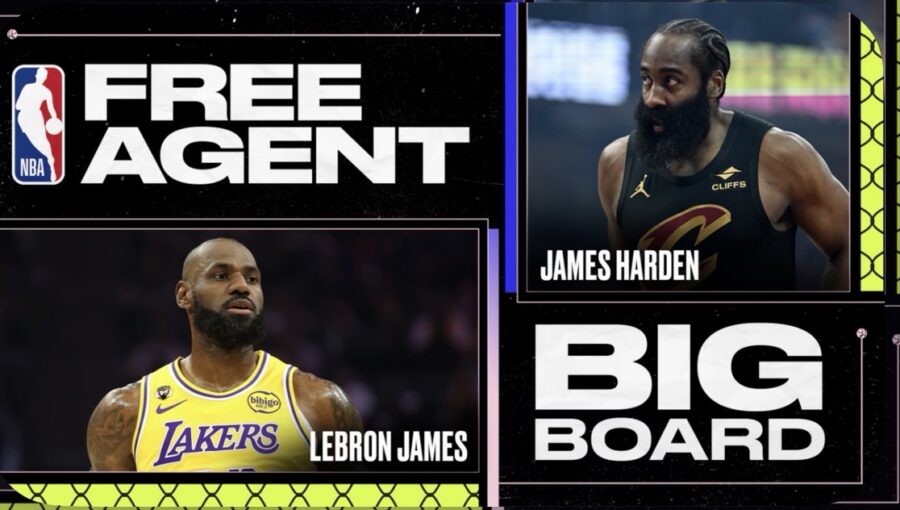
The biggest name is still LeBron James, who is listed among the 2026 unrestricted free agents. At 41, LeBron is not the future of a franchise anymore, but he is still one of the biggest storylines in basketball because every decision he makes shakes the league. The question is no longer, “Can LeBron carry a team for 82 games?” It is: Can the right team put him in position to chase one more title?
Then there are the possible star-level swing pieces with player options, including names like Trae Young, Zach LaVine, and James Harden. Those are not simple free agents. Those are franchise-direction questions. If one of them hits the market, the conversation changes fast. A team is not just signing a player — it is deciding what kind of offense it wants to live with.
Young is the most fascinating name because elite playmaking is still one of the hardest things to find in the NBA. He can bend a defense, create shots out of nothing, and instantly give a team an offensive identity. But the question with Trae is always the same: Can you build a championship-level defense around him, and is the offensive upside worth the cost?
LaVine is a different kind of gamble. When healthy and rolling, he gives a team real scoring punch, athleticism, and shot-making. But teams will have to ask whether they are paying for the player he is now or the version they remember at his peak. That is how NBA money gets dangerous.
Harden may be the most complicated of the group. He can still control tempo, create offense, and punish mistakes. But the playoff question follows him everywhere now. If he opts out, teams will not just be judging his numbers. They will be judging whether his offensive value still outweighs the defensive problems that good playoff teams keep hunting.
The unrestricted free-agent group also has a lot of useful names, even if it lacks a clear prime superstar. C.J. McCollum, Khris Middleton, Kristaps Porzingis, Tobias Harris, Anfernee Simons, John Collins, Terry Rozier, Nikola Vučević, Norman Powell, Collin Sexton, Rui Hachimura, Mitchell Robinson, Robert Williams III, Coby White, Quentin Grimes, and Kelly Oubre Jr. are among the notable names listed for 2026. That is not a perfect class, but it is a class full of players who can matter in the right situation.
The younger guards may end up being the real story.
Anfernee Simons, Coby White, Collin Sexton, and Quentin Grimes are not all the same type of player, but they all fit the modern NBA in different ways. Simons brings scoring and shooting. White can give a team pace and confidence. Sexton adds downhill pressure and energy. Grimes gives teams the kind of 3-and-D profile every contender is looking for. Those are the players who may not dominate the headlines at first, but could become the smartest signings of the summer.
Then there is the big-man market.
Porzingis is the upside play. If healthy, he can stretch the floor, protect the rim, and change the geometry of a playoff offense. But availability matters. Mitchell Robinson and Robert Williams III bring defense, rebounding, and rim protection, but both come with their own durability questions. For contenders, that is the whole gamble: do you pay for what these players can be in April and May, or worry about whether they will be healthy enough to get there?
The restricted free-agent class could be just as important. ESPN listed names such as Jalen Duren, Walker Kessler, Peyton Watson, and Tari Eason as restricted free agents, meaning their current teams can match outside offers. That matters because restricted free agency is where things get uncomfortable. Teams with cap space can force tough decisions, while the original teams have to decide how much they really believe in their young players.
That is what makes this offseason tricky.
It may not be a summer where five superstars change teams. But it could be a summer where contenders find the missing piece, desperate teams overpay, and rebuilding teams use cap space to pressure everyone else.
The best front offices will not chase names.
They will chase fit.
Can this player defend in May?
Can he survive playoff matchups?
Can he shoot when the ball swings to him?
Can he stay healthy?
Can he make life easier for a true No. 1 option?
That is where free agency is really won.
Not in the press conference.
Not in the hype video.
In the matchups six months later, when a team finds out whether the player it paid can actually stay on the floor when the season gets tight.
Final Take
The 2026 NBA free-agent class may not look legendary at first glance, but that does not mean it will be boring.
LeBron’s decision will bring the headlines. Trae Young, LaVine, and Harden could bring the chaos. The younger guards could bring the value. The big men could bring the risk. And somewhere in the middle, one smart team is going to find the player who changes its season.
That is the beauty of NBA free agency.
Sometimes the biggest move is not the loudest one.
Sometimes it is the one that finally makes a team whole.