
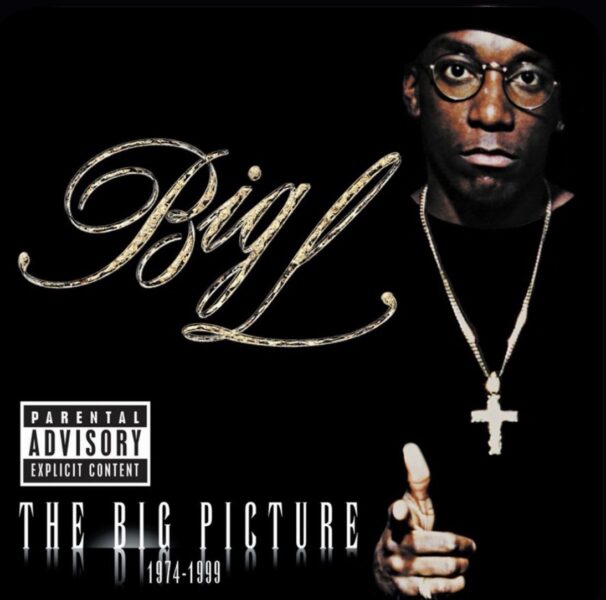
A razor-sharp lyricist from 139th and Lenox, Big L became a legend not because he had the longest career, but because every verse sounded impossible to ignore
Some artists become legends because they dominate for decades.
Big L became a legend because he barely got the time he deserved, and still left behind enough lyrical fire to make generations of rappers study him like a textbook.
Born Lamont Coleman in Harlem, Big L came out of a New York rap scene where words mattered. Not just the beat. Not just the image. Not just the hook. You had to rap. You had to be clever, sharp, dangerous, funny, fearless, and original. And Big L was all of that before most people even knew his name.
He did not sound like someone trying to become famous.
He sounded like someone trying to embarrass every rapper in the room.
That was his gift.
Big L’s style was cold-blooded and effortless. He had punchlines that hit like street-corner jokes with a blade hidden inside them. His flow was smooth, but his words were ruthless. He could be funny, violent, slick, arrogant, and technically brilliant all in the same verse. Every bar felt like it had a trapdoor. Just when you thought you caught the line, another meaning dropped underneath it.
That is why rappers still talk about him with a different kind of respect.
Big L was not just good for his era. He was ahead of it.
In the mid-1990s, New York hip-hop was loaded with giants. Nas had changed the game with Illmatic. The Notorious B.I.G. had become the voice of Brooklyn. Wu-Tang Clan was building an entire universe. Jay-Z was coming. Mobb Deep was turning Queensbridge darkness into classic records. The competition was almost unfair.
And still, Big L stood out.
His 1995 debut album, Lifestylez ov da Poor & Dangerous, introduced the world to one of Harlem’s sharpest pens. The album was raw, grimy, funny, and vicious. It was not trying to be polished for everyone. It sounded like underground New York, with cracked pavement under its shoes and battle rap in its blood.
Tracks like “Put It On,” “M.V.P.,” and “Street Struck” showed different sides of him. “Put It On” had the confidence and swagger. “M.V.P.” had the smoother shine. “Street Struck” showed that beneath the punchlines and bravado, Big L could also step back and tell the truth about the dangers around him.
That is the part people sometimes miss.
Big L was famous for the punchlines, but he was more than a punchline rapper.
He could paint Harlem as a place of pride, pressure, talent, violence, humor, survival, and ambition. He understood the streets, but he also understood the cost. His music could make you laugh one second and feel the weight of the neighborhood the next.
That balance made him special.
Big L also helped define what Harlem rap could sound like. He was part of the Diggin’ in the Crates crew, a respected collective filled with producers and MCs who treated hip-hop like a craft. He was also connected to Children of the Corn, the Harlem crew that included future names like Cam’ron and Mase. Around his neighborhood, Big L was not some hidden secret. People knew. He was the guy other rappers did not want to battle.
And then there was the famous connection to Jay-Z.
Their freestyle together became one of those hip-hop moments fans still pass around like evidence. Jay-Z was already brilliant, already fast, already dangerous with words. But Big L stood right there with him, bar for bar, showing the kind of skill that made people wonder how far he could have gone if life had given him more time.
That is the tragedy behind the legend.
Big L was killed in Harlem in 1999 at only 24 years old. He was gone before he reached the mainstream level many believed was waiting for him. Gone before the next album could fully launch him. Gone before he could grow into the kind of artist his talent promised he might become.
And yet, his legacy did not fade.
That says everything.
Because Big L was not carried by marketing. He was carried by the bars. The freestyles. The verses. The underground tapes. The stories from people who heard him rap and never forgot it. His name survived because the talent was too obvious to disappear.
In hip-hop, there are stars, there are hitmakers, and there are lyricists who become measuring sticks.
Big L became a measuring stick.
When people talk about punchline rappers, his name comes up. When people talk about Harlem rap, his name comes up. When people talk about artists who died too soon, his name comes up. When people talk about pure natural ability on a microphone, his name always comes up.
That is the power of Big L.
He did not need a long catalog to prove the point. He did not need decades of reinvention. He had enough skill in one verse to make people rewind. Enough personality in one line to make people remember. Enough presence in one freestyle to make hip-hop fans wonder what the entire game might have looked like if he had lived.
Big L’s story is not just about death, though that is the shadow that follows it.
It is about talent.
It is about Harlem.
It is about a young rapper with a voice so sharp it still cuts through time.
He was funny without being soft. Street without being simple. Technical without sounding robotic. Confident without sounding forced. He had the rare gift every rapper wants and almost nobody has.
He made difficult rapping sound easy.
That is why Big L still matters.
Not because of what he might have been, but because of what he already was.
A Harlem original.
A punchline genius.
A rapper’s rapper.
A legend with unfinished business.
Big L did not get the long career.
But he got something just as powerful.
He got remembered.