
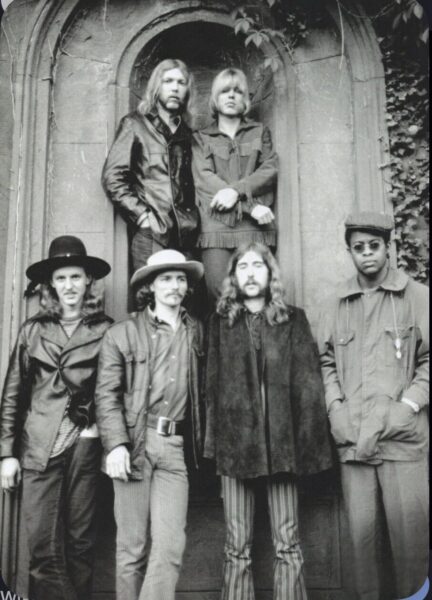
How The Allman Brothers turned blues, tragedy, and brotherhood into one of rock’s greatest live legacies
By Ty
Some bands sound like they were made in a studio.
The Allman Brothers Band sounded like they were made on the highway.
Their music had dust on it. Heat in it. Pain running underneath it. It was blues, rock, country, jazz, gospel, and Southern soul all tangled together into something that did not feel polished as much as alive.
When they played, it did not sound like a band trying to get through a song.
It sounded like six men chasing something.
A groove. A memory. A ghost. A feeling they could only reach if everybody stayed locked in long enough for the music to open up.
That was the magic of The Allman Brothers.
They were not just one of the great Southern rock bands.
They helped define what Southern rock could be.
And at their best, they were one of the greatest live bands America ever produced.
Two Brothers, One Sound
At the center of the story were Duane Allman and Gregg Allman.
Duane was the guitar spirit — fiery, fearless, instinctive, the kind of player who made slide guitar sound like it was crying and roaring at the same time. Gregg had the voice — deep, worn, soulful, older than his years, like a man who had already seen too much and decided to sing through it anyway.
Together, they gave the band its heart.
But The Allman Brothers were never just about two brothers.
That was the whole point.
The band worked because everyone mattered.
Dickey Betts brought melodic guitar lines that could stretch into the sky. Berry Oakley’s bass gave the music muscle. Butch Trucks and Jaimoe created a two-drummer rhythm section that could swing, stomp, roll, and explode without losing the groove.
They did not play like a normal rock band.
They played like a living organism.
Everybody moved. Everybody listened. Everybody pushed.
That is why their songs could go ten, fifteen, twenty minutes and still feel like they were going somewhere. The music was not wandering. It was searching.
Southern Rock Before the Label Got Too Small
People call The Allman Brothers a Southern rock band, and that is true.
But it is also too small.
They were Southern, no doubt. You could hear it in the heat of the guitars, the blues roots, the country bends, the gospel ache, and Gregg’s voice. But the band was bigger than a label. They were not making simple good-time bar music. They were building long, emotional, unpredictable journeys.
Their sound had the freedom of jazz.
The pain of blues.
The storytelling of country.
The power of rock.
That mixture made them different.
A song like “Whipping Post” does not just hit hard because it is loud. It hits because it feels desperate. Gregg sings it like a man trapped inside his own heartbreak, while the band builds around him like the walls are closing in.
“Midnight Rider” feels like pure American loneliness — a man moving because standing still would hurt too much.
“Dreams” sounds haunted, like something drifting between sleep and memory.
And then there is “Jessica,” bright, open, and joyful, proof that The Allman Brothers could make instrumental music feel like sunlight on pavement.
They could do darkness.
They could do beauty.
Most importantly, they could make both feel honest.
At Fillmore East: The Moment They Became Immortal
If you want to understand The Allman Brothers, you do not start with a greatest hits album.
You start with At Fillmore East.
That live album is not just a concert recording. It is the sound of a band fully becoming itself in real time.
The guitars stretch out. The drums breathe. The bass rolls. Gregg’s voice cuts through the smoke. Duane and Dickey trade lines like two men speaking a language nobody else in the room fully understands but everybody can feel.
That is the difference between a good live band and a legendary one.
A good live band plays the songs well.
The Allman Brothers made the songs feel newly born every night.
At Fillmore East captured that perfectly. It showed a band that was technical without being cold, loose without being sloppy, soulful without being fake, and ambitious without losing the blues underneath it all.
It is one of those records that makes you understand why people talk about live music like it is almost religious.
Because when The Allman Brothers were on, they did not just perform.
They lifted the room.
The Tragedy That Changed Everything
Then came the heartbreak.
Duane Allman died in a motorcycle crash in 1971, only 24 years old.
It is hard to overstate what that meant.
Duane was not just the band’s leader in sound. He was the spiritual center. He had the vision. The fire. The confidence. The ability to make everyone around him play better.
For most bands, losing someone like that would have ended everything.
But The Allman Brothers kept going.
That decision was not simple. It could not have been. How do you keep playing when the person who helped build the dream is gone? How do you walk back onstage when every guitar note feels like it is carrying a ghost?
Somehow, they did.
And the music changed.
It had to.
The band could not replace Duane because nobody could replace Duane. So instead, they carried him. His absence became part of the sound. Every long jam, every aching vocal, every slide guitar memory seemed to echo with the fact that someone essential was missing.
That is what gave the next chapter its weight.
The Allman Brothers were no longer just a great band.
They were survivors.
Dickey Betts and the Sound of Moving Forward
After Duane’s death, Dickey Betts became even more important.
His songwriting helped the band find a way forward without pretending nothing had happened. Songs like “Ramblin’ Man” brought a more country-rock sound and gave the band one of its biggest hits.
But “Ramblin’ Man” is not just catchy.
It fits the Allman myth perfectly.
It is about movement. Restlessness. The road. A life that cannot quite settle down. That feeling was already built into the band’s DNA. They were road musicians, live musicians, travelers. Their music always felt like it had somewhere else to be.
Betts helped keep that spirit alive.
He gave the band melody when grief could have swallowed it.
He gave them motion when standing still might have broken them.
Brotherhood, Ego, and the Cost of Survival
The Allman Brothers story is not only beautiful.
It is messy.
Like a lot of great bands, they had tension, excess, personality clashes, and long stretches where the music and the people making it did not always move in the same direction.
That is part of why their story feels so human.
The same things that made them powerful also made them hard to hold together. You had brilliant musicians, strong identities, deep loss, fame, pressure, and the strange burden of carrying a legacy while still trying to live your own life.
Bands are not just sounds.
They are relationships.
And relationships are hard enough without thousands of people expecting you to turn pain into magic every night.
The Allman Brothers did that for years.
Not perfectly.
But honestly.
Why Their Music Still Hits
The Allman Brothers still matter because their music feels real in a way that cannot be faked.
You can hear the sweat.
You can hear the grief.
You can hear the musicians listening to each other.
You can hear the difference between a band playing notes and a band actually communicating.
That is why younger listeners still find them. That is why guitar players still study Duane. That is why live-music fans still talk about Fillmore East like sacred ground. That is why “Midnight Rider,” “Whipping Post,” “Melissa,” “Jessica,” “Statesboro Blues,” and “Blue Sky” still feel alive.
Their songs do not sound trapped in one decade.
They sound like American weather.
Hot roads. Long nights. Broken hearts. Bars closing. Engines running. Someone leaving. Someone remembering. Someone trying to get home and not knowing where home is anymore.
That is The Allman Brothers.
They made music for people who understand that life is beautiful, but it is never clean.
Final Thought
The Allman Brothers Band did not become legendary because everything went right.
They became legendary because so much went wrong, and the music still stood.
They lost Duane. They lost innocence. They fought time, grief, fame, and themselves. But when they played, all of that pain became something bigger than tragedy. It became sound. It became movement. It became a band stretching one song into a whole lifetime.
That is why their legacy lasts.
The Allman Brothers did not just play Southern rock.
They made the South sound haunted, soulful, wild, and free.
They sounded like the road at midnight.
Like a guitar crying through the dark.
Like brotherhood trying to outrun the pain.
And for a few glorious moments at a time, they did.