
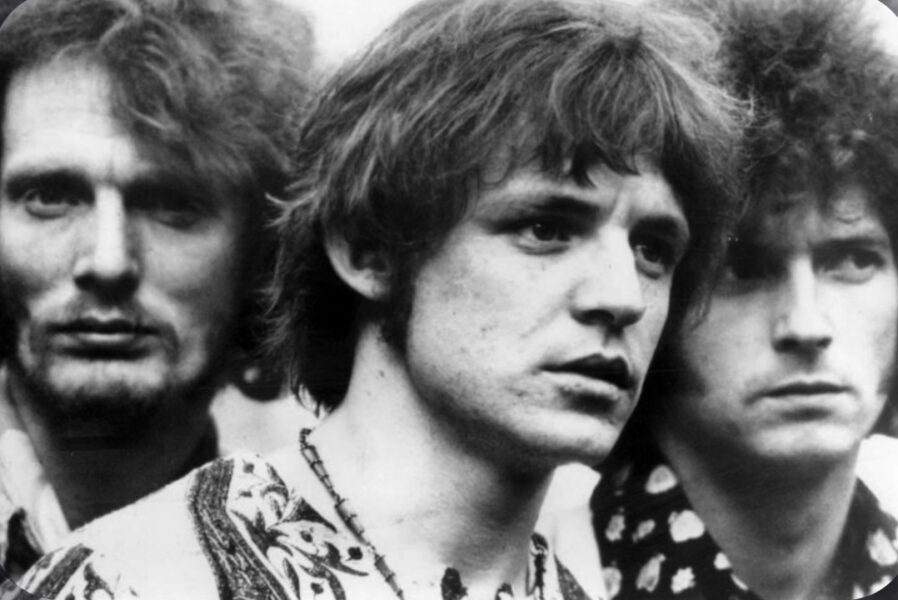
How Eric Clapton, Jack Bruce, and Ginger Baker changed rock music before imploding under their own fire
By Ty
Some bands slowly grow into greatness.
Cream arrived already dangerous.
Before they even became legends, the idea sounded almost unfair: Eric Clapton, the blues-guitar hero people were already calling “God”; Jack Bruce, a powerful bassist and singer with a voice full of soul and tension; and Ginger Baker, a wild, explosive drummer who played like he was trying to knock the walls down.
Three musicians.
Three forces of nature.
One band that sounded like it was constantly on the edge of either genius or collapse.
That was Cream.
They were only together for a short time, but they helped change the language of rock music. They took blues, volume, improvisation, psychedelia, and jazz-level musicianship and turned it into something heavier, louder, and freer than most people were ready for.
They were not just playing songs.
They were stretching rock into something bigger.
But the same fire that made Cream great also made them impossible to hold together.
Three Men Who Were Too Good to Behave
Cream formed in 1966, but it did not feel like a regular band forming.
It felt like three master players stepping into the same room to test how much electricity one group could handle.
Clapton had already built a reputation as one of Britain’s great young guitar players. He had passed through The Yardbirds and John Mayall’s Bluesbreakers, becoming a hero to fans who worshiped blues purity and guitar tone. Clapton’s playing had bite, control, feeling, and that burning sustain that made every note sound like it meant something.
Jack Bruce was different. He was not just a bass player sitting quietly in the background. He played bass like a lead instrument. He pushed the music forward. His voice gave Cream its strange emotional weight — sometimes haunting, sometimes fierce, sometimes almost theatrical.
Then there was Ginger Baker.
Baker did not drum like a polite timekeeper. He attacked the kit. He brought in jazz instincts, African rhythms, power, chaos, and danger. He could be brilliant, difficult, funny, cruel, magnetic, and impossible — sometimes all in the same night.
Together, they were incredible.
Together, they were also combustible.
Cream was built on talent.
It was also built on conflict.
The Sound Was Bigger Than Blues
Cream started with the blues, but they were never content to just copy it.
That is what made them important.
A lot of British musicians loved American blues in the 1960s. They studied Muddy Waters, Robert Johnson, Howlin’ Wolf, B.B. King, Albert King, and Freddie King. But Cream took that influence and pushed it through massive amplifiers, long jams, heavy rhythms, and psychedelic imagination.
The result was something new.
You can hear it in “Sunshine of Your Love.”
That riff does not politely ask to be heard.
It walks into the room and owns it.
It is simple, heavy, unforgettable — the kind of riff that feels carved out of stone. Clapton’s guitar tone is thick and sharp. Bruce’s vocal sounds mysterious and hungry. Baker’s drums give the song that strange, rolling weight.
It is blues-based, but it is not old-fashioned.
It points forward.
You can hear early hard rock in it. You can hear the future of heavy guitar music. You can hear the bridge between blues clubs and stadium volume.
That is what Cream did.
They made the blues louder without removing the soul.
The Power Trio Became a Weapon
Before Cream, rock bands usually needed more pieces to sound huge.
Cream proved three people could be enough.
Guitar.
Bass.
Drums.
That was it.
But in their hands, that simple setup became enormous.
Clapton did not just play rhythm guitar. He filled space with leads, bends, riffs, and tone. Bruce did not just hold down the root notes. He moved around the songs with melodic force. Baker did not just keep time. He created storms.
The power trio became a new kind of rock machine.
Every instrument had room to fight for attention.
That was part of the thrill.
In Cream, nobody disappeared into the background. Everyone was pushing. Everyone was taking risks. Everyone was loud.
That created tension, but it also created freedom.
The songs could open up. Solos could stretch. Jams could become battles. A concert could feel less like a setlist and more like a boxing match with instruments.
That influence is massive.
Without Cream, it is hard to imagine later heavy power trios and guitar-driven bands sounding the same way. They helped show that rock could be both technically impressive and physically overwhelming.
“Crossroads” and the Guitar Hero Moment
If one recording explains why Clapton became a myth, it is “Crossroads.”
Based on Robert Johnson’s blues classic, Cream’s version turned the song into a live explosion. Clapton’s guitar playing is fast, sharp, melodic, and fearless. He does not just play notes. He attacks the song like he is trying to outrun it.
For generations of guitar players, that performance became almost sacred.
It was blues tradition fired through British rock urgency.
And it showed what Cream could do at their best: take something old, honor it, and still make it sound brand new.
That was the magic.
Cream did not invent the blues. They did not own it. But they helped introduce a louder, younger audience to its power, even while transforming it into something more explosive.
“Crossroads” became more than a cover.
It became a statement.
This was not background music.
This was guitar as drama.
The Strange Beauty of Their Psychedelic Side
Cream was not only heavy.
They could also be strange.
That is where songs like “White Room,” “Tales of Brave Ulysses,” and “SWLABR” come in.
These tracks had surreal lyrics, swirling textures, and that late-1960s psychedelic fog. But Cream’s version of psychedelia was not delicate. It still had muscle. Even when the words got dreamlike, the band stayed physical.
“White Room” is the perfect example.
The song feels cinematic from the first moment. Baker’s drums open it like a curtain rising. Clapton’s wah-wah guitar gives it color and tension. Bruce sings like he is trapped inside a memory he cannot escape.
It is not just a rock song.
It feels like a strange movie playing in your head.
That balance is what made Cream different. They could be heavy without being one-dimensional. They could be bluesy, weird, dramatic, aggressive, and poetic all at once.
Greatness With a Countdown Clock
Here is the thing about Cream: they were never built to last.
That almost seems obvious now.
Three intense personalities. Three musicians used to commanding attention. Two members, Bruce and Baker, with a relationship that was famously hostile before Cream even began. Clapton stuck in the middle, trying to chase musical greatness while the band around him kept turning into a war zone.
That is what makes the story so dramatic.
The music sounded like freedom.
The band itself often sounded like a prison.
Onstage, the tension could turn electric. Offstage, it could turn ugly. Bruce and Baker’s clashes became part of the band’s legend. Clapton, meanwhile, eventually grew tired of the volume, the conflict, and the endless instrumental battles.
It is almost ironic.
Cream helped create the rock-god power trio.
Then Clapton started wanting something more restrained, more song-focused, more human.
The band had become too big, too loud, too intense.
Even for the people inside it.
The Farewell Came Fast
Cream’s run was shockingly short.
They formed in 1966 and were essentially done by 1968, with farewell performances and a final chapter that arrived almost before the world had fully processed what they had created.
That is part of why they still feel mythical.
They did not hang around long enough to become ordinary.
They did not spend decades slowly losing the spark.
They arrived, exploded, changed the possibilities of rock music, and disappeared.
That kind of story is powerful because it feels almost cinematic. Like a comet. Like something you only get to see briefly before it burns out.
Their short career left behind songs that still feel enormous: “Sunshine of Your Love,” “White Room,” “Crossroads,” “Badge,” “I Feel Free,” “Strange Brew,” “Spoonful,” and more.
For a band that lasted such a short time, the footprint is ridiculous.
Why Cream Still Matters
Cream matters because they helped turn rock into a musician’s battlefield.
Before them, rock was already changing fast. The Beatles were expanding the studio. Dylan had blown open songwriting. The Stones were making blues dangerous and stylish. Hendrix was transforming the guitar into something cosmic.
Cream belonged in that revolution.
They pushed rock toward volume, improvisation, instrumental mastery, and heavy blues power. They made the live jam feel central. They made the power trio feel limitless. They made bass and drums as aggressive as guitar.
They helped create a world where rock musicians were not just entertainers.
They were players.
Serious players.
And that changed everything.
Cream’s influence can be heard in hard rock, blues rock, progressive rock, jam bands, heavy metal, and every guitarist who ever stood too close to an amp hoping to make one note sound like thunder.
Final Thought
Cream was not peaceful.
Cream was not built for comfort.
Cream was not the kind of band that could sit around forever smiling through reunion tours and pretending the fire never burned anyone.
They were too volatile for that.
But for one brief, insane stretch, Eric Clapton, Jack Bruce, and Ginger Baker found something together that none of them could have created alone. Their music had the weight of blues, the freedom of jazz, the color of psychedelia, and the punch of hard rock before hard rock had fully found its name.
They were brilliant.
They were difficult.
They were loud.
They were gone almost as soon as they arrived.
And maybe that is why Cream still feels so powerful.
They did not fade.
They detonated.