
How a kid from Long Island turned ordinary lives into some of America’s most unforgettable songs
By Ty
Some artists create worlds.
Billy Joel created neighborhoods.
His songs do not feel like they came from some distant rock-star universe. They feel like they came from the booth in the back of a diner. From a packed bar after midnight. From a Long Island train platform. From a guy staring out the window, wondering where his life went. From a couple that used to believe they were going somewhere. From a city that can break your heart and still make you proud to belong to it.
That is Billy Joel’s gift.
He made ordinary people sound important.
He wrote about bartenders, dreamers, working men, Catholic girls, old friends, restless kids, failed lovers, musicians chasing rent money, and New Yorkers who carry their attitude like armor. His music could be funny, bitter, romantic, dramatic, nostalgic, and brutally honest — sometimes all inside the same song.
He was not the mysterious poet like Bob Dylan.
He was not the dangerous outlaw like The Rolling Stones.
He was not the cosmic genius like Brian Wilson.
Billy Joel was something different.
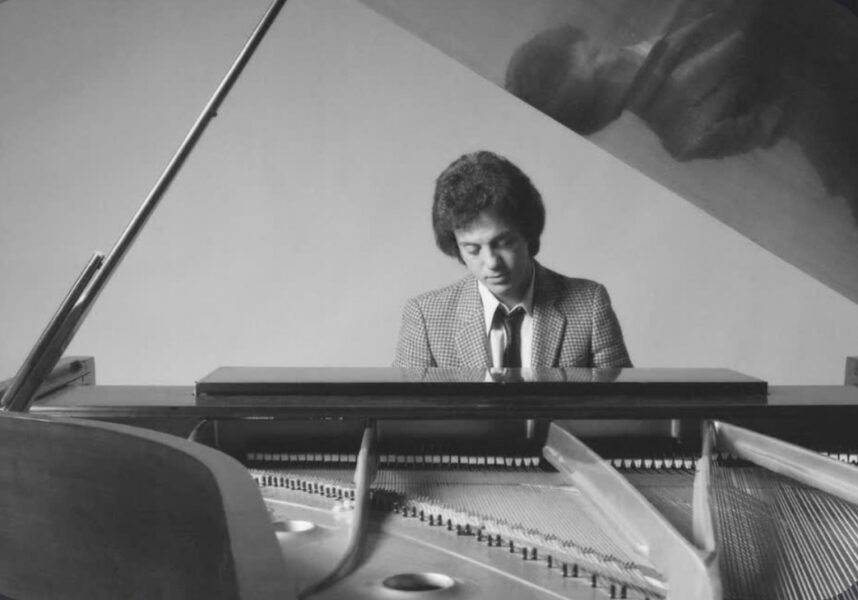
He was the guy at the piano who noticed everybody in the room.
From the Bronx to Long Island
Billy Joel was born in the Bronx in 1949, but his story became deeply tied to Long Island, where he grew up in Hicksville after his family moved there when he was young. The Kennedy Center notes that Joel was raised in the Levittown section of Hicksville, a place that helped shape the working-class, suburban New York atmosphere that runs through so much of his music.
That background matters.
Because Billy Joel never sounded like he was trying to escape New York completely.
He sounded like someone trying to explain it.
The toughness. The humor. The impatience. The romance. The chip on the shoulder. The pride. The feeling that everybody is hustling, nobody is fully satisfied, and even the happiest memories come with a little sarcasm around the edges.
That is why his songs connect so deeply.
They are not just about famous people or glamorous lives.
They are about people you might actually know.
The Piano Man Was Also the Observer
The song that gave Billy Joel his nickname was “Piano Man.”
And the reason that song still works is not just because people love singing the chorus.
It works because it is basically a short story.
There is a bartender. A waitress. A real estate novelist. A Navy man. Regulars sitting around, drinking, talking, dreaming, pretending they are fine. Joel does not mock them. He does not turn them into jokes. He watches them with sympathy.
That is the whole key to Billy Joel.
He understands the sadness behind small talk.
“Piano Man” is not really about the piano player being the star. It is about everyone else in the room needing a song badly enough to forget themselves for a few minutes.
That is why the line between performer and audience feels so important in his music. Joel is singing to them, but he is also one of them. He is the entertainer, but he is trapped in the same room, under the same lights, chasing the same need to be understood.
That is what makes the song timeless.
Everybody knows a bar like that.
Everybody knows a person like that.
Some people are that person.
The Stranger Made Him Impossible to Ignore
For all the talent, Joel’s career did not become unstoppable right away.
Then came The Stranger in 1977.
That album changed everything.
It gave the world “Just the Way You Are,” “Movin’ Out,” “Only the Good Die Young,” “She’s Always a Woman,” and “Scenes from an Italian Restaurant.” It was Joel’s breakthrough into true superstardom, and it showed the full range of what he could do: romantic ballads, biting character songs, streetwise pop, nostalgia, and long-form storytelling.
The album made clear that Billy Joel was not just a guy with catchy piano songs.
He was a songwriter with a whole cast of characters in his head.
“Scenes from an Italian Restaurant” might be the perfect example.
It starts with old friends meeting over wine. Then suddenly it becomes Brenda and Eddie, the popular kids who had everything going for them until life did what life does. The song moves from memory to gossip to tragedy to acceptance, all while feeling like a movie compressed into seven minutes.
That is not just songwriting.
That is storytelling with a piano.
The New York State of Mind
Every major New York artist has a version of the city.
Dylan had Greenwich Village.
The Velvet Underground had downtown darkness.
Bruce Springsteen had the bridge-and-tunnel edge of New Jersey looking toward Manhattan like a promised land.
Billy Joel had the whole New York attitude — the Bronx birth, Long Island upbringing, working musician grind, city pride, and the feeling that New York is not always pretty, but it is always alive.
“New York State of Mind” is not loud or flashy.
It does not need to be.
It feels like someone coming home and realizing no other place hits the same. The song is smoky, jazzy, proud, and tired in the best way. It does not sell New York like a tourist poster. It understands the city as a mood.
New York is not just a location in Billy Joel’s music.
It is a character.
It shows up in the accents, the humor, the speed, the frustration, the romance, and the toughness. Even when Joel writes about personal heartbreak, it often feels like the city is standing somewhere in the background, arms crossed, waiting for him to get to the point.
He Wrote Hits, But Critics Didn’t Always Know What to Do With Him
One of the most interesting things about Billy Joel is that he became massively popular while often being treated unfairly by critics.
That is part of his story.
He wrote songs millions of people loved, but he was sometimes dismissed as too theatrical, too sentimental, too commercial, too sarcastic, too polished, or not cool enough. And yet, year after year, the songs kept lasting.
That says something.
Cool fades.
Songs survive.
Billy Joel’s best work has survived because it hits people where they actually live. Not in some abstract art-school way, but in real emotions: jealousy, regret, pride, memory, anxiety, love, bitterness, hometown identity, and the fear that life may not turn out the way you imagined.
That is why fans defend him so fiercely.
Because Billy Joel songs are not just records people admire.
They are songs people use.
Wedding songs. Bar songs. Breakup songs. Driving songs. Graduation songs. Songs parents pass to kids. Songs New Yorkers sing because they feel like family property.
That kind of connection is bigger than critics.
The Angry Young Man Became the People’s Songwriter
Part of Joel’s appeal is that he could be tender one minute and furious the next.
He could write “She’s Always a Woman,” then turn around and write “My Life.”
He could give you the warmth of “Vienna” and the bite of “Big Shot.”
He could write the romantic ache of “Honesty” and then fire off the historical machine-gun rhythm of “We Didn’t Start the Fire.”
That emotional range is why his catalog feels so alive.
Billy Joel does not only write from one mood. He writes from the whole argument going on inside a person. The hopeful part. The resentful part. The romantic part. The insecure part. The part that wants to leave. The part that wants to come home.
That is very New York too.
Contradiction is part of the personality.
Madison Square Garden Became His Second Home
Billy Joel’s connection to New York reached another level with his historic run at Madison Square Garden.
For years, Joel turned the Garden into his musical home court, selling out show after show and building one of the most famous arena residencies in modern music. His official site notes his long list of honors, including six Grammy Awards, the Grammy Legend Award, induction into the Songwriters Hall of Fame and Rock and Roll Hall of Fame, a Tony Award connected to Movin’ Out, and the Kennedy Center Honors in 2013.
That matters because Madison Square Garden is not just any arena.
It is New York’s stage.
If you can make that room yours, you have done something bigger than touring. You have become part of the city’s routine, part of its memory, part of its emotional calendar.
People did not just go to Billy Joel at the Garden to hear songs.
They went to feel connected to something.
To New York.
To growing up.
To their parents’ music.
To their own past.
To the idea that some songs are strong enough to hold whole decades together.
The Secret Weapon: “Vienna”
If there is one Billy Joel song that has taken on a second life with younger listeners, it is “Vienna.”
And it makes sense.
“Vienna” does not sound like a typical hit-chasing song. It sounds like advice from someone who has already burned himself out and wants to warn you before you do the same.
“Slow down, you crazy child.”
That idea has only become more powerful with time.
People today are exhausted. They are anxious. They are chasing success, comparing themselves to everyone, feeling behind before they have even started. “Vienna” speaks directly to that feeling.
It is not a song about giving up.
It is a song about trusting time.
That is why Billy Joel’s writing can sneak up on people. A song that might have seemed like a deep cut or album track decades ago can suddenly become someone’s life raft.
That is the mark of a real songwriter.
The songs keep finding new people when they need them.
Why Billy Joel Still Matters
Billy Joel still matters because he made popular music feel local and universal at the same time.
His songs are very New York, but the emotions travel.
You do not have to be from Long Island to understand “Scenes from an Italian Restaurant.”
You do not have to be a piano player to understand “Piano Man.”
You do not have to be a New Yorker to understand “New York State of Mind.”
You just have to know what it feels like to remember, regret, love, lose, dream, and keep going.
That is his power.
He took the ordinary and gave it melody.
He took regular people and made them cinematic.
He took local stories and made them feel American.
Final Thought
Billy Joel’s greatness is not just that he wrote hits.
It is that he wrote songs people feel like they have lived inside.
He understood that a bar can be a whole world. That a dinner conversation can become a tragedy. That a city can become a state of mind. That the kid from Long Island can grow up, get knocked around, chase success, get criticized, get praised, and still sit at the piano like he has one more story to tell.
Billy Joel made music for the people who do not always get songs written about them.
The regulars.
The dreamers.
The angry young men.
The old friends.
The lovers trying to hold on.
The New Yorkers who act tough because they care too much.
That is why his music lasts