
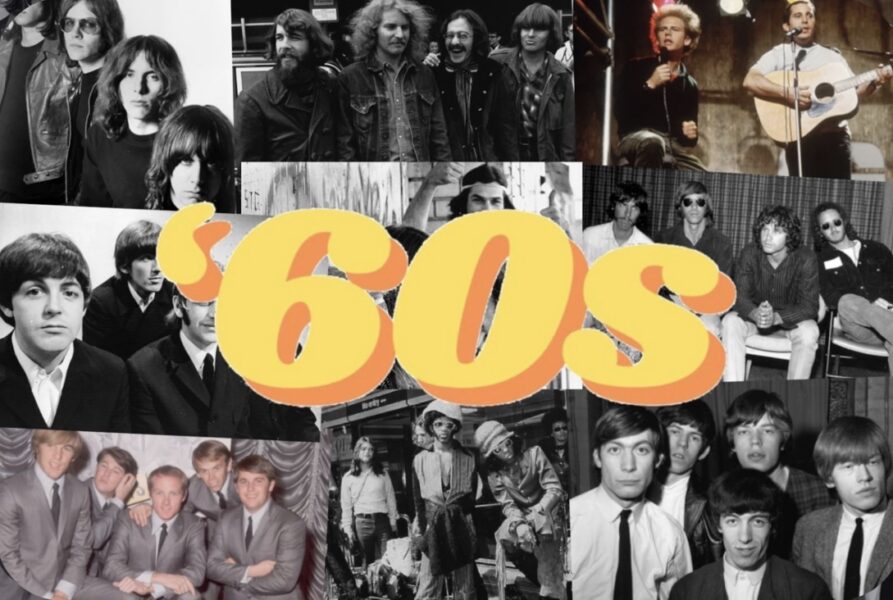
The 1960s were not just a decade of great songs.
They were the decade when music became a cultural force.
It was no longer just something playing in the background at a dance, on a jukebox, or through a little radio in the kitchen. Music became protest. It became identity. It became rebellion. It became fashion. It became a political weapon. It became the sound of young people realizing the world did not have to stay the way it was.
At the start of the decade, popular music still carried the clean shine of the 1950s. The industry loved short singles, polished stars, smooth pop, teen idols, and safe radio hits.
By the end of the decade, everything had changed.
The Beatles had turned pop into art. Bob Dylan had made lyrics feel like literature. The Rolling Stones had made rock dangerous. Motown had become America’s hit factory. Soul music had given the civil rights era a heartbeat. Jimi Hendrix had made the electric guitar sound like it came from another planet. Woodstock had turned a muddy farm into a symbol of youth culture. The space race made music look toward the moon. Vinyl records became more than sound — they became objects, statements, and pieces of people’s identity.
The 60s were the decade music stopped behaving.
And once it broke free, it never went back.
Music Became the Voice of a Generation
What made 60s music different was not just the sound.
It was the meaning.
Songs were no longer only about romance, dancing, heartbreak, or teenage fun. They could be about war. Racism. Civil rights. Freedom. Loneliness. Religion. Sex. Drugs. Politics. Spiritual searching. Youth rebellion. The future.
That was new.
A three-minute song could start an argument.
A record could scare parents.
A lyric could become a slogan.
A concert could feel like a political gathering.
An album could become a world.
Bob Dylan captured that feeling perfectly when he wrote, “The times they are a-changin’.” That line was not just a lyric. It felt like a headline for the entire decade.
Dylan also wrote one of the sharpest lines of the counterculture era in “Subterranean Homesick Blues”: “You don’t need a weatherman.” The full lyric became part of the language of rebellion, because it sounded like a warning to anyone who could already feel which way the culture was moving.
The 60s were full of lines like that — simple enough to remember, powerful enough to last.
The British Invasion Made Rock Global
The British Invasion changed everything.
In the mid-1960s, British bands like The Beatles, The Rolling Stones, The Kinks, The Who, The Animals, The Yardbirds, The Hollies, The Searchers, Herman’s Hermits, The Dave Clark Five, Donovan, and The Troggs swept into America and changed the charts almost overnight.
But here is what makes it so interesting: those British bands were deeply influenced by American music first.
They loved Chuck Berry, Little Richard, Buddy Holly, Elvis Presley, Muddy Waters, Howlin’ Wolf, Bo Diddley, Robert Johnson, and early R&B.
America created the ingredients.
Britain sent them back with sharper suits, longer hair, louder guitars, and a new attitude.
When The Beatles came to America, it was not just another band getting popular. It felt like a cultural takeover. They changed haircuts, fashion, television, radio, songwriting, and the whole idea of what a band could be.
The Beatles made the world scream.
The Stones made it nervous.
The Who made it louder.
The Kinks made it sharper.
The Yardbirds helped point the way toward blues-rock, psychedelia, and hard rock.
By the middle of the decade, the rock group itself became the model: guitars, bass, drums, vocals, original songs, and a band identity that mattered as much as the music.
Rock was no longer just a sound.
It was a movement.
The Beatles Turned Pop Into Art
The Beatles began the decade as charming young rock and rollers from Liverpool.
They ended it as studio revolutionaries.
Their early records were perfect pop: “Please Please Me,” “She Loves You,” “I Want to Hold Your Hand,” “A Hard Day’s Night,” and “Help!”
But what made The Beatles historic was that they refused to stay there.
They kept changing.
Rubber Soul made them deeper.
Revolver made them stranger.
Sgt. Pepper’s Lonely Hearts Club Band made albums feel like complete artistic worlds.
The White Album showed their chaos, personality, and range.
Abbey Road gave the decade one of its most beautiful final statements.
Songs like “In My Life,” “Eleanor Rigby,” “Tomorrow Never Knows,” “Strawberry Fields Forever,” “A Day in the Life,” “Hey Jude,” “Something,” and “Come Together” proved that pop music could be emotional, experimental, funny, sad, strange, and serious all at once.
The Beatles also became controversial because they were so massive. In 1966, John Lennon told journalist Maureen Cleave, “We’re more popular than Jesus now,” a comment that later exploded in the United States and led to boycotts, record burnings, and threats around the band’s tour.
That controversy showed how powerful rock music had become.
The Beatles were not just entertainers anymore.
They were big enough to shake culture.
Bob Dylan Made Lyrics Matter
Bob Dylan changed what people expected from songwriting.
Before Dylan, plenty of pop songs had good lyrics. But Dylan made popular music feel like poetry, protest, journalism, prophecy, sarcasm, and street-corner truth all at once.
His voice was not polished like a classic pop singer. That was part of the point. Dylan sounded like an old road, a protest march, a smoky coffeehouse, and a newspaper headline.
Songs like “Blowin’ in the Wind,” “Masters of War,” “A Hard Rain’s A-Gonna Fall,” and “The Times They Are A-Changin’” became tied to civil rights, anti-war feeling, and young people questioning authority.
Then Dylan changed again.
When he released “Like a Rolling Stone” and went electric at Newport in 1965, he shocked folk purists. Some fans wanted him to stay acoustic forever. Dylan refused.
That moment mattered because it showed what the 60s were really about.
The old guard wanted artists to stay in their lanes.
Dylan stepped out of his and created a new road.
He made songs think.
The Rolling Stones Made Rock Dangerous
If The Beatles were the bright explosion of the 60s, The Rolling Stones were the shadow.
They were rougher, darker, and more dangerous. They came out of American blues and R&B, but they made it louder, dirtier, and more rebellious.
The Stones did not sound like they wanted to hold your hand.
They sounded like they might steal your car.
Songs like “Satisfaction,” “Paint It Black,” “Jumpin’ Jack Flash,” “Sympathy for the Devil,” “Street Fighting Man,” and “Gimme Shelter” made rock feel less innocent.
By the end of the decade, The Stones sounded like the dream turning dark. “Gimme Shelter” feels like the late 60s in one record: war, fear, sex, violence, and chaos moving through the room.
The Stones mattered because they made rock dangerous.
They made it feel like rebellion had teeth.
Soul, Motown, Stax, and the Blues Gave the Decade Its Heart
The 60s were not just about rock.
Some of the deepest and most important music of the decade came from soul, rhythm and blues, gospel, and the blues.
If rock gave the 60s its rebellion, soul gave it its heart.
Soul music came from gospel, R&B, jazz, and Black church tradition. You can hear that church influence in the way singers stretched notes, shouted, pleaded, answered themselves, and made every lyric feel like testimony.
It was not just about sounding good.
It was about feeling something so deeply that the song almost seemed to leave the record and walk into the room.
Motown: The Sound of Young America
Motown Records in Detroit became one of the greatest hit factories in music history.
Founded by Berry Gordy Jr., Motown was nicknamed Hitsville U.S.A., and that name fit perfectly. The label helped bring Black artists into the center of American pop culture during a decade when the country was still fighting over civil rights.
The Supremes brought elegance and pop glamour.
The Temptations brought smooth harmonies and emotional warmth.
Marvin Gaye brought romance and, later, deeper social feeling.
Smokey Robinson brought poetic songwriting.
Stevie Wonder brought young genius and energy.
Martha and the Vandellas brought dance-floor fire.
Songs like “My Girl,” “You Can’t Hurry Love,” “Stop! In the Name of Love,” “Dancing in the Street,” “Reach Out I’ll Be There,” “The Tracks of My Tears,” and “I Heard It Through the Grapevine” were everywhere.
Motown made America dance.
But it also made America listen.
Stax: The Raw Sound of Southern Soul
Then there was Stax Records in Memphis.
If Motown was polished, Stax was gritty.
If Motown wore a sharp suit, Stax rolled up its sleeves.
Stax was home to Otis Redding, Sam & Dave, Booker T. & the M.G.’s, Wilson Pickett, Isaac Hayes, Carla Thomas, Rufus Thomas, and Eddie Floyd.
The Stax sound had deep grooves, stabbing horns, gospel fire, blues feeling, and rhythm sections that felt alive.
Otis Redding was the soul of Stax.
His voice could sound huge one second and wounded the next. He did not sing like he was performing for the crowd. He sang like he was trying to survive the feeling inside the song.
“Try a Little Tenderness” starts gently, then builds until Otis sounds like he is throwing his whole body into the microphone.
And then there is “(Sittin’ On) The Dock of the Bay.”
Otis recorded it shortly before he died in a plane crash in December 1967. It was released after his death and became his biggest hit. What makes it unforgettable is how calm it sounds. It is reflective, quiet, almost peaceful.
It sounds like a man sitting still for the first time.
That sadness, mixed with the real-life tragedy, makes it feel like the decade briefly stopped moving.
Aretha Franklin: The Voice of Power
No discussion of 60s soul is complete without Aretha Franklin.
Aretha did not just sing songs.
She took command of them.
Her 1967 version of “Respect” became one of the defining records of the decade. Otis Redding recorded it first, but Aretha transformed it into something bigger. In her hands, the song became a demand for dignity, a statement for women, a statement for Black America, and one of the most recognizable musical declarations of the 60s.
When Aretha spelled out R-E-S-P-E-C-T, she did not just make a hook.
She made a command.
Aretha gave the 60s authority.
She made soul music sound fearless.
Sam Cooke: The Voice of Hope
Sam Cooke had one of the smoothest voices in American music, but his importance goes beyond beauty.
He helped bridge gospel, pop, soul, and civil rights feeling in a way few artists ever have.
His songs could be romantic and polished: “You Send Me,” “Cupid,” “Wonderful World,” and “Bring It On Home to Me.”
But his most important song may be “A Change Is Gonna Come.”
That song became one of the great musical statements of the civil rights era. It is not loud protest in the way some folk songs were. It is something deeper and more spiritual. It sounds like pain, patience, exhaustion, and hope all living inside one voice.
The song feels like a prayer.
Sam Cooke showed that soul music could be beautiful and socially meaningful at the same time.
The Blues: The Root of the Whole Tree
The blues is one of the main roots of 60s music.
Without the blues, the decade sounds completely different.
The blues gave rock its guitar language. It gave soul some of its pain. It gave British bands their obsession. It gave singers a way to turn heartbreak, poverty, desire, anger, and survival into music.
Artists like Muddy Waters, Howlin’ Wolf, B.B. King, John Lee Hooker, Robert Johnson, Elmore James, Sonny Boy Williamson, and Bo Diddley shaped the sound that younger musicians would build on.
The Rolling Stones worshipped the blues.
Cream turned it louder.
The Yardbirds stretched it into rock experimentation.
Fleetwood Mac started as a British blues band.
Led Zeppelin took blues riffs and made them massive.
Janis Joplin sang with blues pain in her voice.
Hendrix turned the blues into fire and electricity.
That is one of the coolest truths about the 60s:
A lot of British rock started because young English musicians fell in love with Black American blues records.
They were not inventing from nothing.
They were translating, amplifying, and reintroducing America to its own musical roots.
Protest Music Gave the 60s a Conscience
The 1960s were full of conflict: civil rights, Vietnam, generational tension, poverty, draft resistance, and political violence.
Music became one of the main ways people responded.
Folk singers like Joan Baez, Pete Seeger, Phil Ochs, Buffy Sainte-Marie, Peter, Paul and Mary, and Bob Dylan helped build the protest sound of the early decade. Their music did not need huge production. A guitar and a voice could be enough.
That was the power of folk.
It felt direct.
Songs like “Blowin’ in the Wind,” “Masters of War,” “If I Had a Hammer,” “Where Have All the Flowers Gone,” “Eve of Destruction,” “I Ain’t Marching Anymore,” and “We Shall Overcome” became tied to movements, marches, and anti-war feeling.
Joan Baez later pushed back on the idea that Woodstock itself was a revolution, saying, “Social change doesn’t happen without the willingness to take risks.” That quote matters because it reminds us that music could inspire people, but the real work still had to happen outside the concert field.
That was the tension of the 60s.
Music could wake people up.
But it could not do everything by itself.
Psychedelia Made Music Weird, Wild, and Mind-Bending
By the mid-to-late 60s, music started to melt.
Psychedelic rock came out of counterculture, anti-war energy, drug experimentation, Eastern philosophy, surreal imagery, and new recording techniques. It brought longer songs, strange lyrics, reverb, feedback, sitars, tape loops, studio tricks, extended instrumental passages, and album covers that looked like dreams.
Important psychedelic artists included Jimi Hendrix, Jefferson Airplane, The Doors, Pink Floyd, The Grateful Dead, The 13th Floor Elevators, The Beatles, Cream, The Byrds, and Country Joe and the Fish.
Big psychedelic songs included “White Rabbit,” “The End,” “Astronomy Domine,” “Tomorrow Never Knows,” “Lucy in the Sky with Diamonds,” “Sunshine of Your Love,” “Eight Miles High,” and “Are You Experienced?”
Psychedelic music was not just about sound.
It was about atmosphere.
The concert became a trip.
The album became a world.
The guitar became a spaceship.
Jim Morrison of The Doors understood that rock was becoming performance, danger, and theater. In a Rolling Stone interview, he was asked about being called an “erotic politician,” and The Doors’ official site preserves Morrison’s response that it was “just a catch phrase for journalists.” The fact that people even asked that question shows how rock singers had become more than singers — they had become symbols.
Jimi Hendrix Changed the Guitar Forever
Jimi Hendrix did not play guitar like a normal person.
He made it sound like weather.
He could make it cry, scream, explode, bend, burn, and float. He fused blues, rock, soul, psychedelia, feedback, distortion, and imagination into something nobody had heard before.
His major songs included “Purple Haze,” “Hey Joe,” “The Wind Cries Mary,” “Foxey Lady,” “All Along the Watchtower,” and “Voodoo Child (Slight Return).”
Hendrix’s version of “All Along the Watchtower” became so powerful that it almost feels like he took Dylan’s song and launched it into the sky.
By the time Hendrix played “The Star-Spangled Banner” at Woodstock, the guitar was no longer just an instrument.
It was a siren.
A protest.
A weapon.
A voice.
A famous quote often attributed to Hendrix says, “Music doesn’t lie.” The exact sourcing of that line is debated online, so it is safer to use it as an attributed line rather than a guaranteed interview quote. But whether he said it exactly that way or not, it fits what Hendrix represented: sound as truth, freedom, and electricity.
Woodstock Was the Dream — and the Contradiction
Woodstock was not just a festival.
It became a symbol.
In August 1969, hundreds of thousands of young people gathered in Bethel, New York, for three days of music, mud, chaos, peace, drugs, hunger, rain, and history.
The lineup included Jimi Hendrix, The Who, Janis Joplin, Santana, Sly and the Family Stone, Crosby, Stills, Nash & Young, Jefferson Airplane, Joe Cocker, Joan Baez, Richie Havens, Country Joe McDonald, and many others.
Woodstock was beautiful because it almost fell apart and somehow held together.
Richie Havens opened the festival and ended up playing far longer than expected because other performers were delayed. He later said “Freedom” was created onstage: “It was the last thing I could think of to sing. I made it up.”
That quote captures Woodstock perfectly.
It was not polished.
It was improvised.
Country Joe McDonald’s anti-Vietnam performance became another defining moment. His “I-Feel-Like-I’m-Fixin’-to-Die Rag” was sarcastic, angry, funny, and direct — exactly the kind of protest music that could only come from that era. AP described McDonald as an anti-Vietnam War activist whose Woodstock performance became a signature counterculture moment.
But Woodstock was also complicated.
It was peace and mud.
Love and exhaustion.
Community and chaos.
Idealism and reality.
That is why it still matters.
It showed the dream of the 60s at its biggest.
But it also showed how fragile that dream was.
Altamont Showed the Dark Side
If Woodstock was the dream, Altamont was the nightmare.
In December 1969, The Rolling Stones headlined a free concert at Altamont Speedway in California. The event became infamous for violence, chaos, poor planning, and the death of Meredith Hunter near the stage.
For many people, Altamont symbolized the end of the 60s ideal.
Woodstock said, “Maybe music can bring people together.”
Altamont said, “Maybe it cannot.”
That contrast is important because the 60s were never just peace signs and flowers.
The decade had beauty, but it also had violence.
It had hope, but also fear.
It had freedom, but also consequences.
Music carried all of it.
Vinyl, Mono, Stereo, and FM Radio Changed How People Listened
The significance of 60s music was not only in the songs.
It was also in how people heard them.
Vinyl was the main event. People bought 45s for singles and LPs for albums. They held the cover, read the back, stared at the artwork, dropped the needle, and listened.
The record was physical.
You owned it.
You played it.
You shared it.
You wore it out.
A record collection told people who you were.
Then came the mono vs. stereo shift.
Today, most people assume stereo is automatically better. But in the 60s, mono was often the main way pop and rock records were mixed and heard. Mono was punchy, centered, and direct. Stereo was wider and more futuristic, but early stereo mixes could be strange, with vocals on one side and instruments on the other.
That is why original mono pressings from artists like The Beatles, Dylan, The Stones, and Motown still matter to collectors.
Mono was the punch.
Stereo was the expansion.
FM radio also changed listening. AM radio was built around singles: short songs, big hooks, quick impact. But FM radio helped open the door for deeper cuts, longer songs, album tracks, psychedelic experiments, and music that did not fit the tight AM format.
That helped the album become more important.
By the late 60s, music was no longer just about the hit single.
It was about the whole experience.
The Album Became a Journey
Before the 60s, popular music was mostly single-driven.
A hit song was the prize. Albums often existed to support the single.
The 60s helped change that.
With better recording technology, more ambitious artists, and the growing importance of the LP, albums started becoming cohesive statements. They were not just collections of songs anymore. They could have themes, moods, stories, characters, and complete worlds.
Important 60s albums included:
The Beatles — Rubber Soul
The Beatles — Revolver
The Beatles — Sgt. Pepper’s Lonely Hearts Club Band
The Beach Boys — Pet Sounds
Bob Dylan — Highway 61 Revisited
Bob Dylan — Blonde on Blonde
The Jimi Hendrix Experience — Are You Experienced
The Doors — The Doors
The Rolling Stones — Beggars Banquet
The Rolling Stones — Let It Bleed
The Velvet Underground & Nico — The Velvet Underground & Nico
The Moody Blues — Days of Future Passed
The Who — Tommy
King Crimson — In the Court of the Crimson King
The idea was simple but revolutionary:
An album could be more than songs.
It could be a journey.
The Space Race Gave Music a Cosmic Sound
The 1960s were also the decade when the world looked up.
The space race between the United States and the Soviet Union made the future feel real. Rockets were launching. Astronauts became national heroes. Families gathered around televisions to watch history happen in black and white.
Then, in 1969, Apollo 11 put humans on the Moon.
That changed the imagination of the decade.
Music felt it too.
By the late 60s, songs started sounding bigger, stranger, and more cosmic. Artists experimented with echo, reverb, tape effects, unusual instruments, and lyrics that reached beyond everyday life. The studio became a place where musicians could create sounds that felt like outer space.
David Bowie’s “Space Oddity” became the perfect example. Released in 1969, right around the Apollo 11 moment, the song made space feel lonely, mysterious, and emotional.
Other artists captured that space-age feeling too:
Pink Floyd sounded like they belonged in another galaxy.
The Beatles gave us “Across the Universe.”
The Tornados had already made a futuristic hit with “Telstar.”
The Byrds played with UFO imagery on “Mr. Spaceman.”
Jimi Hendrix made the guitar sound like it was bending through time and gravity.
The same decade that sent humans to the Moon also sent music into new worlds.
The space race gave the world a new frontier.
Music gave that frontier a sound.
Music in Film Helped Spread the Sound
The article does not need to become about movies, but it is worth mentioning one thing: music films helped spread 60s culture.
The Beatles’ A Hard Day’s Night helped turn the band’s humor, image, and sound into a global pop-culture package. Help! pushed their screen image even further. Later, Woodstock, the documentary film, helped turn the festival into a lasting myth for people who were not there.
That is the key point.
Films mattered when they carried the music outward.
They helped people see the sound.
Real Quotes and Lines That Capture the 60s
The 60s gave us quotes and lyrics that still feel alive.
John Lennon’s “We’re more popular than Jesus now” became one of rock’s most controversial statements because it showed the strange power The Beatles had over youth culture.
Bob Dylan’s “You don’t need a weatherman” became one of the sharpest lines of the counterculture era.
Richie Havens said “Freedom” was created onstage at Woodstock because he had run out of songs and had to keep going.
Joan Baez later said, “Social change doesn’t happen without the willingness to take risks,” pushing back on the idea that Woodstock alone was a revolution.
Jim Morrison, when asked about being an “erotic politician,” dismissed it as “just a catch phrase for journalists,” which shows how even rock stars were wrestling with their own myths.
Dylan’s line “The times they are a-changin’” became the decade’s unofficial warning.
Aretha Franklin did not need a long speech to make her point. “Respect” said it for her.
That is what made 60s music powerful.
The artists did not just make songs.
They made language people could live inside.
My Final Take
The 1960s were not just a great decade for music.
They were the decade when music became part of everything.
It was in the records spinning on bedroom turntables. It was in the crowds screaming at The Beatles on television. It was in Bob Dylan’s lyrics, sounding like warnings from the street. It was in Aretha Franklin demanding respect. It was in Otis Redding sitting by the dock of the bay. It was in Sam Cooke promising that change was going to come. It was in Hendrix turning the national anthem into a storm. It was in Motown making America dance while the country was still fighting over who got treated equally. It was in Woodstock, where hundreds of thousands of young people gathered in the mud and tried to believe music could hold the world together.
That is why 60s music still matters.
It was not just one style, one sound, or one scene. It was a collision of everything: rock, soul, blues, folk, country, gospel, pop, psychedelia, protest, vinyl, FM radio, festivals, youth culture, and rebellion.
To me, the 60s feel like the moment music realized how powerful it could be.
A song could make people dance.
A song could start an argument.
A song could comfort someone.
A song could scare parents.
A song could challenge the government.
A song could make love feel spiritual.
A song could make the Moon feel lonely.
A song could make an entire generation feel seen.
That is why the music from that decade does not feel old.
It feels alive.
The 60s did not just change what people listened to.
They changed what people expected music to do.