
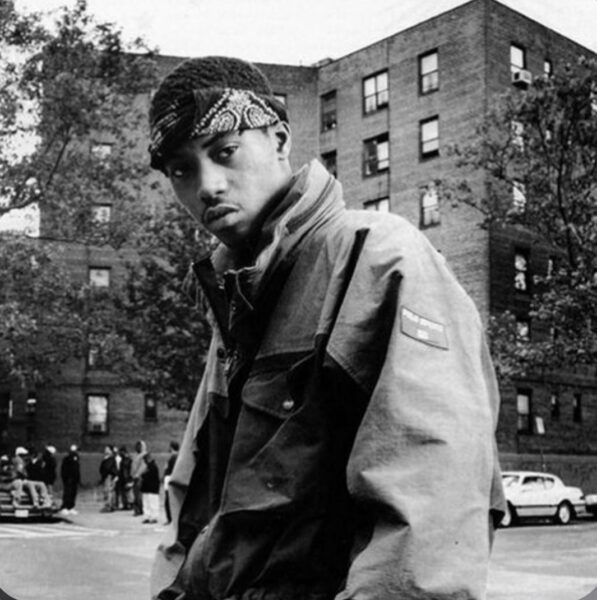
From Illmatic to hip-hop immortality, Nas built a career on truth, detail, and one of the sharpest pens rap has ever heard
Before Nas became one of the greatest rappers ever, he was a young voice coming out of Queensbridge with a notebook full of city life, street corners, broken dreams, survival stories, and wisdom that sounded too old for his age.
He did not enter hip-hop like someone chasing fame.
He entered like a witness.
That is what made Nas different.
From the beginning, Nas rapped like he was reporting from the middle of the world he knew. His music did not just describe the streets. It put you there. You could see the buildings, hear the sirens, feel the pressure, and understand the hunger. He had the rare ability to make a verse feel like a movie, a confession, a warning, and a poem all at once.
When Illmatic arrived in 1994, hip-hop changed.
The album was not long. It did not need to be. It was tight, focused, cinematic, and almost impossibly mature. Nas was only a teenager when much of it came together, but he sounded like he had already lived three lives. Every line carried detail. Every song had atmosphere. Every beat felt like New York pavement under cold sneakers.
Illmatic became more than a debut album.
It became a blueprint.
Songs like “N.Y. State of Mind,” “The World Is Yours,” “Memory Lane,” and “One Love” showed exactly why Nas was special. He had technical skill, but he never sounded like he was rapping just to prove he could rap. The bars served the story. The rhymes served the feeling. His words had purpose.
That is what separates great rappers from legendary ones.
Nas could make the personal feel universal.
He could rap about Queensbridge and make someone far away understand the weight of it. He could turn a block into a symbol. He could take the pain of young people growing up around violence, poverty, temptation, and pressure, then give it shape. He never made it sound simple. He showed the beauty, the danger, the pride, and the tragedy living beside each other.
That honesty became his signature.
Nas was not just a street rapper. He was a thinker. A historian. A storyteller. A battle rapper when he needed to be. A philosopher when the song called for it. He could be cold and cutting, then reflective and vulnerable. He could sound like a kid from the projects and an old soul at the same time.
That range gave him staying power.
After Illmatic, Nas faced something almost impossible. How do you follow an album that people immediately treat like a classic? How do you grow when fans want you frozen in one perfect moment?
Nas did not stay still.
He moved into bigger sounds, bigger records, and a more polished style with It Was Written. Some fans wanted the raw underground feel of Illmatic, but the album proved Nas could expand without losing his pen. “If I Ruled the World,” with Lauryn Hill, gave him one of his most memorable records, while deeper cuts still showed the same sharp storytelling that made people believe in him from the start.
That became the story of Nas’s career.
He was always balancing two things: the poet and the star.
Sometimes the industry wanted hits. Sometimes fans wanted another Illmatic. Sometimes critics wanted him to stay exactly where he began. But Nas kept writing through all of it. The highs, the misses, the pressure, the battles, the doubts, the comebacks.
And then came “Ether.”
In hip-hop history, diss tracks are part of the culture, but “Ether” became something bigger. It was not just a response. It was a moment. Nas reminded everyone that beneath the calm voice and reflective writing was a rapper who could still step into a lyrical fight and leave a mark. The Jay-Z feud became one of the most famous battles in rap history, and Nas walked out of it with his legend even stronger.
But the most impressive thing about Nas is not just that he survived eras.
It is that he kept finding ways to matter.
Hip-hop changed around him again and again. The sound changed. The business changed. The audience changed. New stars came in. New styles took over. But Nas remained respected because the foundation never disappeared.
The pen.
The voice.
The perspective.
He became proof that lyricism does not have an expiration date.
Later in his career, Nas found another creative run that reminded people how rare his gift still was. Instead of becoming just a legacy act, he sounded renewed. Older, wiser, sharper in a different way. He was no longer only the young poet from Queensbridge. He was the veteran looking back at the whole journey, still carrying the same gift that made him great.
That is the beauty of Nas.
His music grew with him.
The young Nas showed what it felt like to come of age under pressure. The older Nas showed what it means to survive, reflect, build, and still speak with authority. He became a bridge between generations, respected by old-school fans, studied by lyricists, and still relevant to younger listeners discovering Illmatic like it is a sacred text.
Nas’s greatness is not only in his rhyme schemes, though those are elite.
It is not only in his storytelling, though few have ever done it better.
It is not only in his classic albums, battles, or influence.
His greatness is in the way he made hip-hop feel literary without making it feel distant. He proved rap could be street-level and poetic, raw and intelligent, personal and historical. He showed that a rapper could be a narrator, a character, a critic, and a dreamer all at once.
Nas gave Queensbridge a permanent place in music history.
He gave hip-hop one of its greatest albums.
He gave writers a standard to chase.
And he gave listeners something deeper than entertainment.
He gave them truth.
That is why Nas still matters.
Not because people keep saying he is one of the greatest.
Because every time you go back to the music, you hear why.
Nas was never just rapping about where he came from.
He was turning it into art.
And thirty years later, the world is still listening.