
Before they were the Beatles, they were just four boys from Liverpool with cheap guitars, loud dreams, and no real reason to believe the world would ever know their names.
John Lennon was sharp, restless, and rebellious. Paul McCartney had melody running through him before he fully understood what to do with it. George Harrison was the quiet kid with the guitar chops older musicians could not ignore. Ringo Starr was still playing drums in another Liverpool group, not yet knowing he would become the final heartbeat of the most famous band in history.
Together, they would become the Fab Four.
But it did not begin with screaming airports, royal honors, studio masterpieces, or record-breaking fame. It began in church halls, basement clubs, rough German bars, bad sleeping rooms, long nights, rejection letters, and a working-class port city that seemed far away from the center of the music world.
The Beatles did not come out of nowhere.
They came out of repetition. Out of hunger. Out of exhaustion. Out of four young musicians learning, night after night, how to hold a room that did not care about them yet.
That is the real magic of the Beatles story. They looked sudden. They were not.
The First Spark
The story starts on July 6, 1957, at a church fête in Woolton, Liverpool.
John Lennon was 16 years old, playing with a skiffle group called the Quarrymen. Skiffle was rough, homemade music — folk, blues, jazz, and rock and roll thrown together with whatever instruments young British kids could get their hands on.
That day, John met 15-year-old Paul McCartney.
Paul could play. He knew chords. He knew lyrics. He could tune a guitar properly, which sounds small until you remember these were teenagers trying to figure out rock and roll without YouTube, tutorials, or perfect equipment.
Soon, Paul was in the group.
Then Paul brought in his younger friend George Harrison. John thought George was too young. George was only 15, but he had something the band needed: feel. He could play lead guitar with a sharp rockabilly edge, and he was persistent enough to make John take him seriously.
So the first true center formed: John, Paul, and George.
They were not stars. Not yet. They played wherever they could — local halls, small clubs, family parties, weddings, and any room that would let them plug in. Their names kept changing too: the Quarrymen, Johnny and the Moondogs, the Silver Beetles, the Silver Beatles.
Then finally: the Beatles.
A little joke. A little “beat” music. A little Buddy Holly and the Crickets influence. A name that sounded strange until it became impossible to imagine music history without it.
Hamburg Made Them Dangerous
Liverpool gave the Beatles their beginning.
Hamburg made them a band.
In 1960, the Beatles went to Hamburg, Germany, where they played in the city’s red-light district. It was not glamorous. It was not clean. It was not safe. It was the kind of place where a young band either got better fast or got swallowed.
The clubs were loud. The crowds were drunk. The hours were brutal.
They played night after night for hours at a time. John Lennon later said, “It was Hamburg that did it,” because the band had to work so hard and play so long that they developed a toughness they never would have found at home.
That is one of the great Beatles facts: before America saw them as polished stars on The Ed Sullivan Show, they had already been through the musical boot camp of Hamburg. They had learned how to stretch songs, command drunk crowds, joke from the stage, keep energy alive, and survive when nobody was treating them like future legends.
They arrived as Liverpool hopefuls.
They came back as a real band.
Brian Epstein Saw the Star Quality
By 1961, the Beatles were becoming a serious local name in Liverpool. Their home base was the Cavern Club, a sweaty underground room where the walls seemed to hold the sound in.
That is where Brian Epstein saw them.
Epstein was a record-store manager, polished and refined, almost nothing like the rough young band in front of him. But he saw what others missed. The Beatles had charm. They had wit. They had danger. They had songs, presence, and chemistry.
He became their manager in January 1962 and began reshaping their future.
He cleaned up the image, but he did not kill their personality. The leather jackets slowly gave way to suits. The stage manners improved. The business became more serious. But underneath it all, they were still funny, cocky, working-class Liverpool boys who sounded different from everyone else.
And they needed that confidence, because the music business did not immediately welcome them.
Decca Records rejected them. The famous story goes that the label thought guitar groups were on the way out. It is one of the worst predictions in music history.
Then came George Martin.
Martin, the producer at EMI’s Parlophone label, was not instantly convinced they were geniuses. But he liked them. He liked their humor. He liked their energy. He liked that they had something you could not teach.
There was still one problem: the drummer.
Pete Best had been with them through Hamburg, but Martin had concerns about his drumming. In August 1962, Best was replaced by Ringo Starr, already respected around Liverpool from his time with Rory Storm and the Hurricanes.
That decision was painful. It was controversial. Fans were upset.
But musically, the final piece had clicked into place.
John. Paul. George. Ringo.
The Beatles were complete.
The First Hits
Their first single, “Love Me Do,” released in 1962, was not a lightning bolt. It was more like a door opening.
Then came “Please Please Me.”
George Martin pushed the band to play it faster. After they recorded it in November 1962, Martin reportedly told them, “Gentlemen, you have just made your first number one record.”
He was right.
In 1963, the Beatles recorded much of their debut album, Please Please Me, in one long studio session. That fact alone tells you what kind of band they had become. They were road-tested. They were fast. They were disciplined. They knew how to perform under pressure.
Then the hits came quickly.
“Please Please Me.”
“From Me to You.”
“She Loves You.”
“I Want to Hold Your Hand.”
And suddenly, Britain was screaming.
Beatlemania was not ordinary fame. It was mass hysteria. Girls fainted. Police fought crowds. Concerts became almost impossible to hear. The screaming was so loud that the band often could barely hear themselves play.
But the Beatles were not just cute. That is why they lasted.
They were funny in interviews. They were quick. They were sarcastic. They looked like a gang, but a charming one. They seemed like they were always one step ahead of the adults trying to understand them.
They were not just making hits.
They were becoming a feeling.
America Falls
When the Beatles flew to America in February 1964, even they were not completely sure it would work.
Paul McCartney wondered what they could give America that America did not already have. After all, America had invented the rock and roll they loved: Chuck Berry, Little Richard, Elvis Presley, Buddy Holly, the Everly Brothers.
Then they landed at JFK Airport.
Thousands of fans were waiting.
Reporters swarmed them. Police held back the chaos. The Beatles stepped off the plane and walked into a new level of fame.
Two days later, they appeared on The Ed Sullivan Show. Roughly 73 million Americans watched, making it one of the most famous television moments in music history.
America had been grieving after the assassination of President John F. Kennedy only months earlier. Then came these four young men from Liverpool, smiling, joking, bowing, shaking their hair, and playing songs that sounded like the future had arrived early.
The effect was immediate.
In April 1964, the Beatles held the top five spots on the Billboard Hot 100 at the same time — something no one had done before.
That is not just a fun fact.
That is domination.
The Coolest Early Beatles Facts
Here are the details that make their rise even crazier:
George Harrison was so young during the Hamburg days that he was eventually deported from Germany for being underage.
Paul McCartney originally played guitar, but after Stuart Sutcliffe left the group, Paul moved to bass — and ended up becoming one of the most melodic bass players in rock history.
Ringo was not the first drummer, but his personality and steady playing gave the band the balance it needed.
George Martin did not just “record” the Beatles. He helped translate their wild ideas into studio reality, later becoming known as the unofficial “fifth Beatle.”
The Beatles’ first U.S. explosion seemed overnight, but they had already spent years grinding through Liverpool and Hamburg before America ever saw them.
That is why the story works. They were not lucky kids who got famous by accident. They were young, talented, funny, and prepared.
More Than Pop Stars
At first, the Beatles were sold as lovable moptops.
Matching suits.
Perfect harmonies.
Boyish smiles.
Quick jokes.
But they were changing fast.
A Hard Day’s Night made them movie stars. Help! pushed them deeper into global fame. But behind the scenes, touring was becoming exhausting and dangerous. The crowds were too loud. The security risks were growing. The music was becoming too advanced for the stage equipment of the time.
By 1966, the Beatles had a problem most bands would love to have: they were too famous to function normally.
So they stopped touring.
Their final paid concert came at Candlestick Park in San Francisco in 1966. After that, they became something even more powerful.
A studio band.
That decision changed everything.
The Studio Becomes Their Universe
Once they stopped touring, the Beatles turned the studio into a playground, laboratory, and dream machine.
Rubber Soul showed they were becoming more mature and introspective.
Revolver blew open the doors.
“Eleanor Rigby” used classical strings and sounded nothing like a normal rock song.
“Tomorrow Never Knows” used tape loops and psychedelic production that still sounds strange today.
“Yellow Submarine” gave Ringo one of his most beloved lead vocal moments.
“Taxman” showed George Harrison becoming a stronger writer.
“Yesterday” became one of the most covered songs in popular music history.
They were no longer writing only love songs. They were writing about loneliness, taxes, childhood, death, spirituality, memory, and the strange colors of the mind.
The Beatles had become artists in the biggest sense.
Not just performers.
Not just celebrities.
Artists.
Sgt. Pepper and the Peak of the Dream
In 1967, the Beatles released Sgt. Pepper’s Lonely Hearts Club Band.
It was more than an album. It was an event.
The cover looked like a museum of the imagination. The songs sounded theatrical, colorful, strange, and alive. The Beatles created a fictional band so they could escape being trapped by their own fame.
And somehow, by pretending to be someone else, they became even more themselves.
Sgt. Pepper helped prove that rock albums could be serious art. Not just singles. Not just teenage entertainment. Full albums with themes, sounds, characters, colors, and emotional worlds.
The Beatles were now carrying the spirit of the 1960s.
That sounds dramatic, but it is true.
They represented youth, experimentation, rebellion, humor, peace, drugs, fashion, spirituality, and the idea that the world could be remade by sound.
No band could carry that forever.
The Cracks Begin
The death of Brian Epstein in August 1967 changed everything.
Epstein had been the manager, protector, organizer, and believer. Without him, the Beatles lost the person who helped keep the chaos outside the room.
After that, the band kept making brilliant music, but the unity was fading.
Magical Mystery Tour had great songs, but the film was messy.
The White Album was massive, brilliant, weird, beautiful, and fractured. It sounded less like one band and more like four artists pulling in different directions under one famous name.
John was becoming more involved with Yoko Ono and avant-garde art.
Paul was trying to keep the band productive.
George was frustrated that his songwriting was still often treated as secondary.
Ringo briefly quit during the sessions because he felt unwanted.
And yet somehow, they still made “While My Guitar Gently Weeps,” “Blackbird,” “Dear Prudence,” “Helter Skelter,” “Back in the U.S.S.R.,” and “Ob-La-Di, Ob-La-Da.”
That is the strange thing about the Beatles.
Even when they were falling apart, they were still making songs most bands would spend a lifetime chasing.
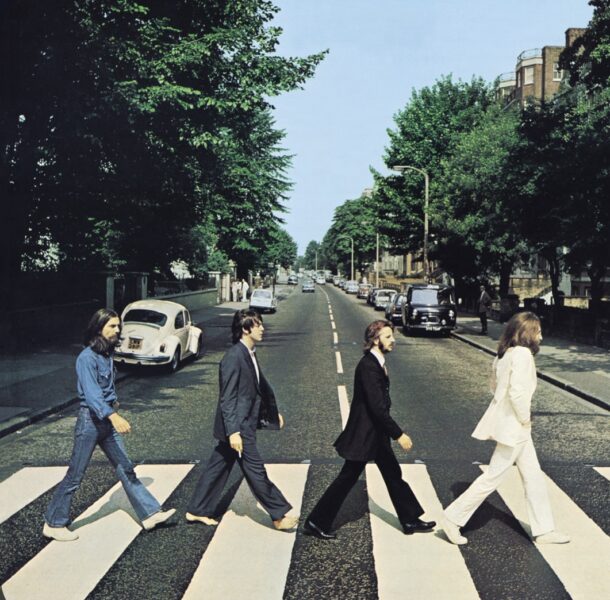
Abbey Road: One Last Miracle
The Let It Be sessions were supposed to bring the Beatles back to basics.
Instead, they showed a band under stress.
The cameras were rolling. The arguments were real. George walked out for a short time. John seemed distant. Paul pushed to keep things together. Ringo stayed steady, as usual.
But before the end, they gave the world one final masterpiece.
Abbey Road arrived in 1969.
It sounded smoother than the tension behind it. George delivered “Something” and “Here Comes the Sun,” two of the greatest songs he ever wrote. John brought darkness and bite. Paul helped shape the famous medley on side two. Ringo gave the album grace and swing.
Then came that final line:
“And in the end, the love you take is equal to the love you make.”
It sounded like a goodbye before the world officially knew it was one.
The Dream Ends
By 1970, the Beatles were finished.
Paul publicly announced his departure. Let It Be was released. The film showed a band trying to create while slowly coming undone.
The breakup was not clean. There were lawsuits, business fights, hurt feelings, and years of distance.
John Lennon went on to make raw, personal solo music before he was murdered in New York in 1980.
George Harrison found his own voice with All Things Must Pass and later became part of the Traveling Wilburys before his death in 2001.
Ringo Starr became a beloved solo artist and touring figure.
Paul McCartney built one of the most successful post-Beatles careers ever, first with Wings and then as a solo artist.
They never fully reunited.
But the Beatles never really went away.
Why They Still Matter
The Beatles are widely regarded as the best-selling music act of all time, with estimated worldwide sales in the hundreds of millions. They had 20 No. 1 singles on the Billboard Hot 100 and became one of the most influential groups in modern culture.
But numbers do not fully explain them.
The Beatles matter because they evolved in public.
They began as teenagers copying American rock and roll. Then they became the biggest pop band in the world. Then they became studio revolutionaries. Then they became symbols of an entire generation. Then they broke apart before they could become ordinary.
Most bands get one great era.
The Beatles had several in less than ten years.
The Liverpool kids.
The Hamburg survivors.
The Beatlemania phenomenon.
The studio innovators.
The fractured geniuses giving the world one last masterpiece.
That is why the story still works.
They were not perfect. They were not magical creatures untouched by ego, pressure, jealousy, or exhaustion. They were young men carrying impossible fame, and somehow they made music that still feels like discovery.
The Beatles lasted as a band for only a short time.
But in that time, they changed the sound of the world.
And more than half a century later, the world is still singing along.