
By Ty
Some music sounds so perfect that you almost forget real people had to survive each other to make it.
That is the strange magic of Simon & Garfunkel.
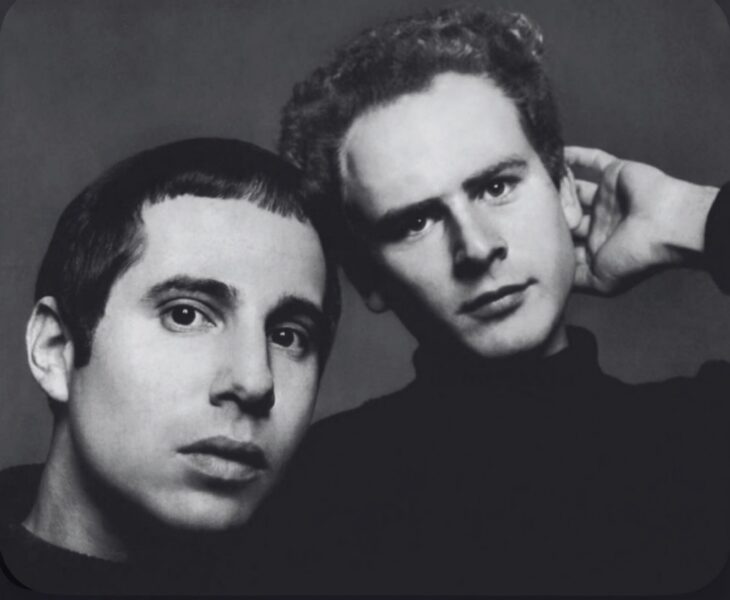
Their songs feel gentle. Clean. Almost weightless. Two voices rising together like they were built for the same piece of sky. When Paul Simon and Art Garfunkel harmonized, it sounded less like two singers and more like one thought split into two beautiful halves.
But behind that beauty was tension.
Behind the calm was competition.
Behind the silence was a friendship that never fully knew how to stay whole.
That is what makes Simon & Garfunkel one of the most fascinating stories in American music. They did not just make pretty folk songs. They turned loneliness, youth, alienation, friendship, ego, and heartbreak into records that still feel like they are whispering directly into your ear.
They were not loud like The Rolling Stones.
They were not explosive like Dylan going electric.
They were not psychedelic superheroes like The Beatles.
They were quieter than that.
And sometimes, quiet cuts deeper.
Two Boys From Queens
Before the fame, before the Grammys, before Central Park, before the breakups and reunions, they were just two kids from New York.
Paul Simon and Art Garfunkel grew up in Queens, only a few blocks apart, and attended school together. Their early friendship was shaped by the same neighborhood, the same radio dreams, and the same teenage fascination with harmony. Their official biography notes that they were drawn to groups like the Everly Brothers and came up during an era when young singers were trying to find their place inside folk, pop, and rock and roll.
That detail matters.
Because Simon & Garfunkel never sounded like they came from nowhere.
They sounded like boys who had listened hard. Boys who studied the way voices could lock together. Boys who understood that harmony was not just a musical trick — it was a feeling.
At first, they even performed under the name Tom & Jerry, scoring an early hit with “Hey Schoolgirl” in 1957. Long Island Music and Entertainment Hall of Fame describes their rise as beginning with two teenagers from Forest Hills, Queens, whose friendship turned into a remarkable musical journey.
That is the innocent beginning.
Two kids. Two voices. One dream.
But the thing about dreams is that they get heavier once they come true.
The Song That Refused to Stay Quiet
Simon & Garfunkel’s first album did not immediately make them stars.
In fact, their early acoustic version of “The Sound of Silence” did not explode right away. The song’s rise became one of those strange music-history moments where timing, radio, and reinvention changed everything.
The song was later electrified without the duo originally building it that way, and suddenly the quiet folk ballad became something bigger: a haunted anthem for a generation trying to understand itself.
That is what Simon & Garfunkel did best.
They made uncertainty sound beautiful.
“The Sound of Silence” does not feel like a normal hit single. It feels like walking through a city at night and realizing everyone around you is lonely in a different way. The song is not loud, but it is massive. It is about people failing to speak, failing to listen, failing to connect.
And somehow, two voices from Queens made that emptiness sound unforgettable.
That became their gift.
They could make loneliness feel communal.
The Beauty Was in the Contrast
Part of what made the duo work was that Paul Simon and Art Garfunkel were not the same kind of artist.
Simon was the writer, the architect, the restless craftsman. He built the songs with literary detail, sharp melody, and emotional intelligence. He could write about a boxer, a lost young man, a troubled country, a broken relationship, or a person standing on the edge of adulthood and make it feel personal.
Garfunkel was the voice that lifted those songs into the clouds.
His tenor had a purity that made Simon’s writing feel almost sacred. If Simon gave the songs their bones, Garfunkel gave them their light.
That is why the partnership worked.
But it is also why it became difficult.
When two people complete each other artistically, they can also start to resent the fact that they need each other.
Simon wrote the songs.
Garfunkel made many of them sound immortal.
That balance was beautiful.
It was also dangerous.
The Songs Sounded Peaceful, But the Story Wasn’t
The deeper Simon & Garfunkel went into success, the more complicated the relationship became.
That is the hidden tension in their catalog. Songs like “Homeward Bound,” “America,” “The Boxer,” “Scarborough Fair/Canticle,” “Mrs. Robinson,” and “Bridge Over Troubled Water” sound polished and graceful, but they came from a partnership full of pressure.
They were becoming one of the defining groups of the 1960s, but the world was changing fast around them. Folk music had become political. Rock music had become louder. The Beatles were pushing the studio into new territory. Dylan had already shattered expectations. America was dealing with Vietnam, protest, youth rebellion, cultural fracture, and generational confusion.
Simon & Garfunkel did not respond by trying to overpower the noise.
They responded by sounding human.
That is why “America” still hits so hard. It is not just a travel song. It is a song about searching for meaning in a country that feels too big to understand. Two people ride buses, smoke cigarettes, count cars, and look out windows — but underneath it all is the ache of a generation asking, Where are we going?
That is the quiet genius of Paul Simon’s writing.
The songs feel small until you realize they are about everything.
The Graduate Changed Everything
Then came The Graduate.
When Simon & Garfunkel’s music became tied to the 1967 film starring Dustin Hoffman, their songs took on a new cultural life. “Mrs. Robinson” became more than a catchy track. It became part of the sound of modern disillusionment — young people looking at the older world and realizing the rules did not make much sense anymore.
The group’s music fit the film because it carried the same mood: smart, detached, anxious, funny, and sad underneath the surface.
“Mrs. Robinson” later won major Grammy recognition, including Record of the Year, and The Graduate soundtrack also earned Grammy recognition.
That moment pushed Simon & Garfunkel from popular folk-rock duo into something bigger.
They were now part of the American cultural wallpaper.
Their songs were not just being heard.
They were explaining a mood.
Bridge Over Troubled Water: The Masterpiece and the Breaking Point
Every great duo has a song that becomes bigger than both people.
For Simon & Garfunkel, that song was “Bridge Over Troubled Water.”
It is one of those records that feels almost impossible to argue with. Garfunkel’s vocal does not just sing the song — it carries it like a prayer. Simon wrote something simple enough for everyone to understand and grand enough to feel eternal.
When you hear it, you understand why people return to it during grief, comfort, loss, and hope.
It is not just a song about helping someone.
It is a song about showing up when another person cannot carry the weight alone.
The album Bridge Over Troubled Water became their final studio album together, and it was a massive success. At the 1971 Grammys, the album won Album of the Year, while the title song won Record of the Year and Song of the Year.
But here is the painful part.
Their greatest triumph came right as the partnership was falling apart.
That is what makes the story so dramatic. The world heard unity. The two men making it were drifting toward separation.
It is almost too perfect and too sad.
Their most famous song is about being there for someone.
And after it, they could not really be there for each other anymore.
The Breakup That Made the Songs Hurt More
Simon & Garfunkel split after reaching the mountaintop.
That is one of the reasons their story still feels so powerful. They did not slowly fade out after years of bad records. They left behind a final album that sounded like a victory parade and a funeral at the same time.
After the breakup, both men went their own ways. Simon built a major solo career, later reaching another creative peak with Graceland. Garfunkel pursued music and acting, appearing in films and continuing to perform. Their official history and later accounts describe a relationship that repeatedly moved between reunion, affection, bitterness, and distance.
That is what gives their music its afterlife.
When you listen to them now, you are not just hearing perfect harmonies.
You are hearing something fragile.
You are hearing the sound of two people who could create beauty together but could not comfortably live inside that beauty forever.
And honestly, maybe that is why the songs last.
They sound like friendship.
They also sound like loss.
Central Park: The Ghosts Come Home
Years after the breakup, Simon & Garfunkel reunited for one of the most famous concerts in New York history.
On September 19, 1981, they played The Concert in Central Park, drawing an estimated crowd of around 500,000 people. PEOPLE described the show as a historic reunion that brought half a million fans into the park and became one of the defining moments of their career.
That image is incredible.
Two kids from Queens, now grown men, standing in front of a sea of New Yorkers, singing songs that had followed people through their youth, marriages, heartbreaks, protests, car rides, dorm rooms, and lonely nights.
It must have felt like time folding in on itself.
The city that shaped them was now singing back.
But even that reunion did not fully heal the relationship. The same report notes that hopes for a lasting reunion eventually ran into the old creative and personal tensions again.
That might be the most honest ending possible.
The songs could return.
The magic could return.
But the old wounds came back too.
Why People Still Care
People still care about Simon & Garfunkel because their music does not feel trapped in the 1960s.
It still speaks to people who feel disconnected.
People who miss home.
People who are trying to find themselves.
People who have friendships that became complicated.
People who know what it feels like to love someone and still not know how to stay close to them.
That is why their songs have aged so well. They were never only about a particular decade. They were about human feelings that keep coming back: silence, searching, comfort, memory, loneliness, and the ache of leaving something behind.
And the sound itself remains almost untouchable.
Two voices.
No wasted emotion.
No cheap drama.
Just melody, words, and that strange feeling of hearing beauty from people who may have been hurting each other while making it.
Final Thought
Simon & Garfunkel’s story is powerful because it proves that harmony does not always mean peace.
Sometimes harmony is what two people create because they cannot find it anywhere else.
Paul Simon and Art Garfunkel gave the world songs that sounded gentle enough to float, but underneath them was ambition, rivalry, distance, love, frustration, and history. They were childhood friends who became legends. They were partners who became strangers. They were two voices that fit together so perfectly that even their silence became part of the story.
That is why their music still matters.
Because when Simon & Garfunkel sang together, they made loneliness sound beautiful.
And when they stopped, the silence they left behind became almost as famous as the songs.