
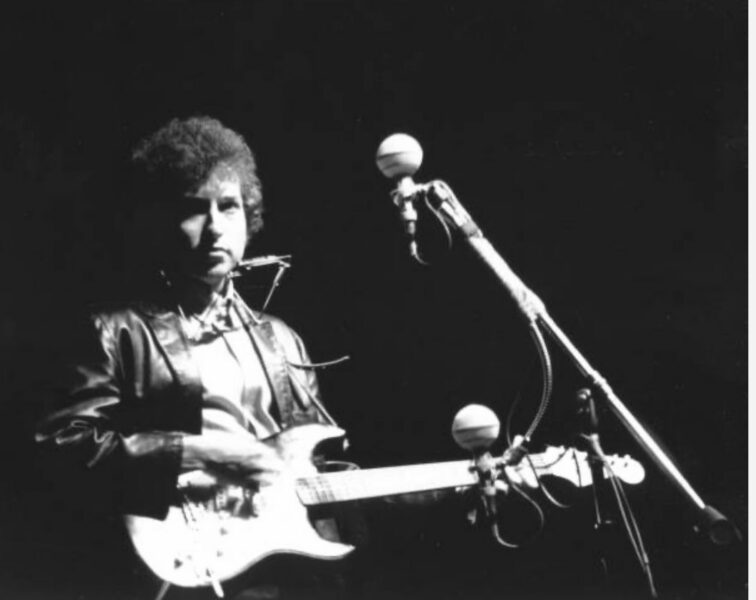
How one chaotic Newport performance shattered folk music’s rules and helped invent modern rock.
Some moments in music history are big.
Others completely shift the culture.
Bob Dylan going electric at the Newport Folk Festival was one of those moments.
July 25, 1965.
Thousands came expecting the Bob Dylan they knew—the acoustic folk poet behind “Blowin’ in the Wind,” “The Times They Are A-Changin’,” and “Masters of War.” Instead, Dylan walked onstage with an electric guitar, a loud backing band, and shattered the expectations of an entire generation.
But the real story is more interesting than “Bob got booed.”
Why It Was Such a Big Deal
In 1965, Dylan wasn’t just a musician—he was the voice of socially conscious folk music. To many fans, folk represented authenticity and truth. Acoustic instruments meant honesty. Electric guitars meant commercialism.
So when Dylan plugged in, some fans saw it as betrayal.
But here’s what many people forget: Newport didn’t come out of nowhere.
Earlier that year, Dylan had already released Bringing It All Back Home, blending acoustic and electric music. Then came “Like a Rolling Stone,” a six-minute song that broke radio rules and helped prove popular music could be poetic, ambitious, and commercially successful.
Dylan wasn’t suddenly changing.
He already had.
What Actually Happened That Night
Dylan hit the stage and tore through:
- “Maggie’s Farm”
- “Like a Rolling Stone”
- “Phantom Engineer” (an early version of “It Takes a Lot to Laugh, It Takes a Train to Cry”)
The reaction was chaotic.
Yes, some fans booed—but not all because he went electric.
One of the lesser-known facts is that the sound mix was reportedly terrible. The band was too loud, Dylan’s vocals were muddy, and many in the crowd simply couldn’t hear the lyrics.
Even Pete Seeger’s famous story about wanting to cut the cables with an axe was later clarified—it was reportedly more about the awful sound than Dylan using electric instruments.
Why It Changed Everything
Dylan didn’t abandon folk music—he expanded it.
He fused poetic songwriting with rock energy and helped redefine what popular music could be.
After Dylan’s electric shift:
- Rock became more literary
- Albums became artistic statements
- Reinvention became acceptable
- Artists had permission to evolve
You can hear that influence in Bruce Springsteen, Patti Smith, David Bowie, and even The Beatles’ later experimentation.
The real backlash came in 1966, when a fan famously shouted “Judas!” at Dylan during a concert for “betraying” folk music.
Dylan’s response?
“I don’t believe you… you’re a liar.”
Then he turned to the band:
“Play fing loud.”*
That moment said everything.
Final Thought
Dylan plugging in wasn’t just a music controversy.
It was the moment an artist refused to stay frozen in the version fans wanted.
And in doing so, he helped invent the future of rock music.